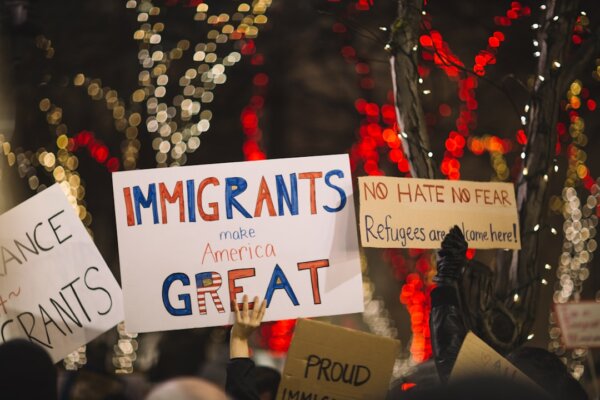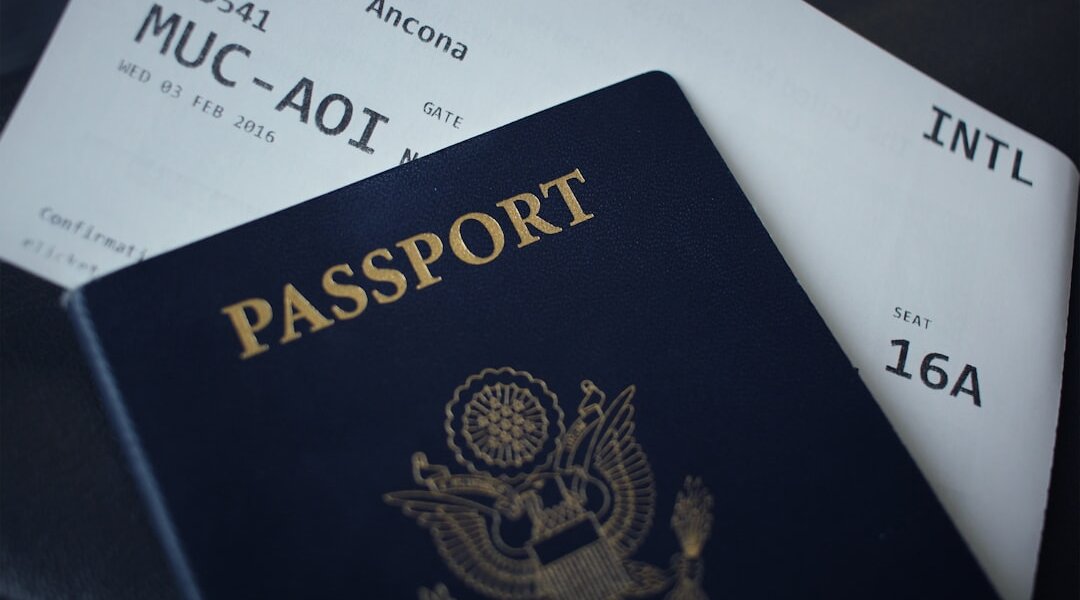
Photo by Nicole Geri on Unsplash
For countless powering the American , the dream of in the U.S. is increasingly resembling an insurmountable hurdle. In 2026, the gridlock has reached critical levels, trapping highly qualified professionals in a perpetual state of temporary status, often for decades. This isn’t merely an administrative hiccup; it’s a systemic crisis with profound implications for individuals, families, and the nation’s economic competitiveness.
The journey from an visa to a is a multi-stage process involving the Department of Labor (DOL) and U.S. Citizenship and Immigration Services (). It typically begins with a labor certification, followed by an I-140 immigrant petition, and finally, the I-485 application for adjustment of status. Each step is fraught with its own timelines and potential delays, but the most significant bottleneck remains the availability of numbers.
The Unyielding Wall: Understanding Annual Limits and Per-Country Caps
At the heart of the gridlock lies a decades-old that has failed to keep pace with global demand. Congress caps the total number of employment-based s at approximately 140,000 per fiscal year. However, the real choke point is the “per-country cap,” which dictates that no single country can receive more than 7% of the total available visas in any given year.
While intended to promote diversity, these create massively disparate wait times. For nations with high populations and a significant number of seeking – primarily India and China – the 7% limit translates into an agonizingly slow queue. Imagine a line where everyone from a small village gets through quickly, but people from bustling cities must wait for decades, simply because of their birthplace. That’s the reality for many holders.
For example, in 2026, an applicant from India in the (advanced degree professionals) or (skilled workers) category might find their priority date from over a decade ago still not current. Estimates suggest that for some Indian nationals, the wait for an could extend to 13-15+ years. Even the typically faster category has seen significant for India and China in 2025-2026.
Living in Limbo: The Reality of Retrogression and Endless Waiting
The , released monthly by the U.S. Department of State, is the oracle of , publishing “final action dates” and “dates for filing” that determine when applicants can move forward. The term “retrogression” sends shivers down the spines of holders, as it means previously current dates move backward, extending the wait even further.
This constant flux makes long-term planning incredibly difficult. An holder might have an approved I-140 petition, establishing their “priority date” – their place in line. However, if their country’s final action date retrogresses, their application for adjustment of status (I-485) is put on hold, sometimes indefinitely. While status can often be extended beyond the typical six-year limit if a application is pending, this only prolongs the temporary nature of their stay, preventing them from fully integrating or making long-term career decisions.
Adding to the complexity are the processing delays at and the Department of Labor. In 2026, labor certifications continue to experience lengthy adjudication and audit timelines, and I-485 applications face significant backlogs. The overall backlog hit 11.6 million pending cases in April 2026, affecting every category of immigration benefit.
Beyond the Bureaucracy: The Human and Economic Toll
The gridlock isn’t just about paperwork; it’s about people. on visas, many of whom are integral to the U.S. , face immense personal and professional challenges. The inability to predict their timeline impacts major life decisions, from buying a home to starting a business or even pursuing advanced education.
This uncertainty can lead to a “brain drain,” as highly talented individuals may choose to seek opportunities in other countries with more straightforward pathways. The U.S. risks losing its competitive edge in critical fields like AI and software development if it cannot retain its top global talent. Employers, too, struggle with retaining foreign talent and face challenges in workforce planning due to the unpredictable nature of the process.
Recent policy discussions, including potential new rules forcing applicants to leave the U.S. for processing, have only intensified the anxiety within the community and drawn sharp criticism from tech leaders and immigration advocates.
Navigating the Maze: Strategies for H1B Holders and the Call for Reform
While the systemic issues persist, holders and their employers can adopt strategies to navigate the complex landscape. Early filing of and I-140 petitions is crucial to secure an earlier priority date. Exploring eligibility for higher preference categories, such as (Priority Workers), which often have shorter wait times, can also be beneficial for some.
Staying informed through the monthly and working closely with experienced attorneys is paramount. Additionally, provisions like AC21 allow extensions beyond six years if a application is pending, providing a lifeline during long waits.
Ultimately, a lasting solution requires comprehensive reform. Proposals to eliminate or significantly raise for employment-based s, as well as exempting dependents from the annual limits, have been debated in Congress. While a temporary “spillover” of unused family-based visas provided an additional 46,000 employment-based s for FY 2026, this is not a permanent fix. These legislative changes are vital to ensure that the U.S. remains a magnet for global talent and that contributing to its economy are offered a clear and equitable path to .
The gridlock is a ticking time bomb for the U.S. and the dreams of countless professionals. It’s time for a transparent, efficient, and fair system that values talent over origin. Join the conversation and advocate for meaningful reform.