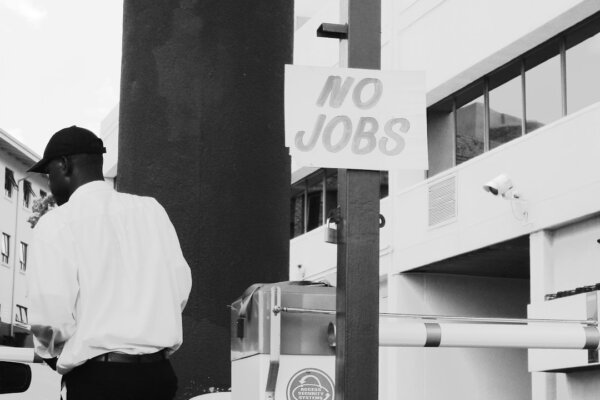
Photo by Nicholas Cappello on Unsplash
In a stunning and sobering display of economic volatility, the global job market has been rocked by a brutal 24-hour cascade of mass layoff announcements. Major tech giants, established manufacturing powerhouses, and leading service providers have simultaneously revealed significant workforce reductions, sending shockwaves through industries worldwide. This synchronised downturn highlights a complex interplay of economic headwinds, technological advancements, and shifting consumer behaviours, forcing a re-evaluation of employment stability across sectors.
The Tech Sector’s Reckoning: Overhiring, AI, and Market Correction
The tech industry, long perceived as an unshakeable engine of growth, is once again at the forefront of this job shockwave. Following unprecedented hiring sprees during the pandemic-driven digital acceleration, many tech giants are now grappling with overstaffing, rising operational costs, and a more cautious investment climate. Recent announcements from household names in software, e-commerce, and social media point to thousands of roles being eliminated. The reasons are multifaceted: a slowdown in consumer spending on digital services, the rising cost of capital, and perhaps most significantly, the accelerating integration of Artificial Intelligence (AI) and automation. AI’s enhanced capabilities are enabling companies to achieve greater efficiency with smaller teams, fundamentally reshaping job functions and skill requirements. This isn’t merely a cyclical adjustment; it’s a structural shift demanding a new paradigm for tech talent. Read more about AI’s impact on future jobs.
Manufacturing’s Shifting Sands: Supply Chains, Automation, and Geopolitics
Parallel to the tech industry’s woes, the manufacturing sector, a cornerstone of global economies, is also undergoing significant upheaval. Large-scale layoffs have been reported from automotive giants, electronics manufacturers, and industrial machinery producers. While some reductions are attributed to ongoing supply chain disruptions and fluctuating raw material costs, a deeper transformation is at play. Increased automation, particularly in robotics and advanced manufacturing processes, is reducing the need for manual labour. Furthermore, geopolitical tensions are prompting companies to re-evaluate their global production footprints, leading to consolidation and relocation of operations that can result in job losses in certain regions. The drive for efficiency and resilience, while economically sound for businesses, creates immediate challenges for the workforce accustomed to traditional factory roles. The shift towards Industry 4.0 is accelerating, demanding new skills in data analytics and machine operation rather than repetitive assembly tasks.
Service Industry’s Struggle for Stability: Inflation, Interest Rates, and Digital Transformation
Even the seemingly resilient service sector, encompassing everything from finance and retail to hospitality and logistics, has not been immune to this brutal cascade. Major banks, retail chains, and logistics companies have announced significant workforce cuts. High inflation and rising interest rates are impacting consumer purchasing power and business investment, leading to reduced demand for various services. In retail, the continued pivot towards e-commerce and automated checkout systems is redefining the in-store experience, often requiring fewer human touchpoints. In finance, digital transformation and the adoption of AI for tasks like data analysis and customer service are streamlining operations, leading to reductions in back-office and administrative roles. This trend underscores a broader move towards digital-first strategies, where efficiency gains often come at the cost of traditional employment structures. For many, adapting to these changes means embracing continuous learning and upskilling.
Navigating the New Normal: Resilience and Reskilling are Key
The brutal 24-hour cascade of layoff announcements serves as a stark reminder of the dynamic and often unforgiving nature of the global economy. While the immediate impact is undoubtedly challenging for those affected, it also signals an accelerating paradigm shift in the world of work. Companies are prioritising agility, efficiency, and technological integration, while individuals are confronted with an urgent need for adaptability and continuous learning. The future of employment will increasingly favour those with versatile skills, a growth mindset, and the ability to navigate technologically driven environments. Reskilling and upskilling initiatives, both employer-led and self-driven, will be crucial for individuals to thrive in this evolving landscape.
This global job shockwave isn’t just a moment of crisis; it’s a catalyst for profound transformation. It compels us all – individuals, businesses, and policymakers – to rethink education, career paths, and economic support systems to build a more resilient and adaptable workforce for tomorrow. What steps are you taking to future-proof your career in this rapidly changing world? Share your thoughts and strategies in the comments below.