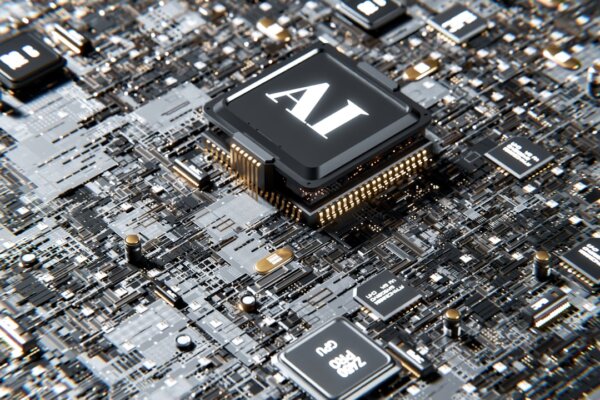
Photo by Tim Mossholder on Unsplash
The air in the tech world is thick with the hum of servers and the buzz of innovation, largely driven by the relentless march of Artificial Intelligence. From generative models crafting intricate prose to autonomous systems navigating complex environments, AI has transitioned from science fiction to a pervasive force, prompting big tech companies to pour billions into its development. But as the investment figures soar and new AI startups emerge daily, a critical question looms: Are we witnessing a genuine AI Gold Rush, or is this burgeoning enthusiasm inflating a ‘Green Bubble’ destined to burst?
The Unprecedented Influx of Capital into AI
The scale of investment in AI is nothing short of staggering. Tech giants like Microsoft, Google, Amazon, and NVIDIA are not just dabbling; they are making foundational bets on AI’s future. Microsoft’s multi-billion-dollar commitment to OpenAI, the creator of ChatGPT, sent clear signals across the industry, accelerating the race to integrate generative AI into every facet of software and services. Google, not to be outdone, has doubled down on its own AI research and product integration, from enhancing search capabilities with AI to developing advanced models like Gemini. Amazon is heavily investing in AI for its cloud services (AWS), e-commerce recommendations, and smart home devices.
NVIDIA, a key enabler of this revolution, has seen its market valuation skyrocket as demand for its high-performance GPUs, essential for training and running complex AI models, explodes. This investment isn’t just in software; it’s in the fundamental hardware infrastructure that powers AI. The belief is that AI will be the next major computing platform, transforming industries from healthcare and finance to manufacturing and entertainment. This level of financial commitment underscores a profound conviction in AI’s long-term potential, painting a picture of a legitimate ‘gold rush’ where early movers stand to gain immense market share and influence.
Beyond the Hype: Tangible AI Applications and Challenges
While the financial figures are impressive, the true test of a ‘gold rush’ lies in the tangible value AI delivers. We are already seeing transformative applications. In healthcare, AI assists in drug discovery, personalized medicine, and diagnostic imaging. Financial institutions leverage AI for fraud detection, algorithmic trading, and customer service. Autonomous vehicles, though still in development, promise to revolutionize transportation. These real-world applications demonstrate AI’s capacity to solve complex problems and create new efficiencies, justifying some of the hefty investments.
However, the path isn’t without its challenges. The talent crunch in AI, particularly for specialized roles like machine learning engineers and data scientists, is a significant hurdle. Furthermore, the ethical implications of AI, including bias, privacy concerns, and job displacement, require careful navigation. Regulatory frameworks are still catching up to the rapid pace of technological advancement, creating an environment of uncertainty for developers and deployers of AI systems. The high computational costs associated with training and running advanced AI models also present a barrier to entry for smaller players, consolidating power among the tech giants. These challenges suggest that while the underlying technology is robust, the widespread, equitable, and profitable deployment of AI is a complex endeavor that could temper overly optimistic expectations.
Distinguishing a Gold Rush from a Green Bubble
The distinction between a genuine gold rush and a speculative bubble often lies in the underlying fundamentals. A gold rush is driven by the discovery of a truly valuable resource that generates sustained economic activity and wealth. A bubble, conversely, is characterized by asset prices that far exceed their intrinsic value, fueled by speculation and irrational exuberance, often leading to a sharp correction.
The current AI landscape exhibits elements of both. On the ‘gold rush’ side, the fundamental capabilities of AI are undeniable. It’s not a fleeting trend but a foundational technological shift with broad applicability. Companies are investing in R&D, infrastructure, and talent that will yield long-term benefits. However, the rapid appreciation of AI-related stocks, the proliferation of AI-branded products that offer marginal improvements, and the intense fear of missing out (FOMO) among investors bear hallmarks of speculative behavior. Some AI startups, particularly in the generative AI space, have achieved exorbitant valuations with business models that are still largely unproven or reliant on future technological breakthroughs. The question is whether the market is accurately pricing in the *time* and *effort* required for these innovations to mature and generate sustainable revenue, or if it’s overestimating immediate returns.
The Road Ahead: Sustainable Growth or Market Correction?
The consensus among many analysts is that while there may be pockets of overvaluation, the core AI trend is robust and here to stay. This isn’t a dot-com bubble where many companies lacked viable business models. Instead, it’s a re-platforming event, similar to the advent of the internet or mobile computing, where existing industries are being transformed and new ones created. However, a ‘green bubble’ scenario isn’t entirely off the table for certain niche areas or companies with inflated expectations and weak fundamentals. We might see a correction in specific segments, particularly those that are more hype than substance, but the overall trajectory of AI adoption and innovation is likely to continue upwards.
The key for investors and businesses will be to differentiate between genuine innovation with clear value propositions and mere AI-washing. Companies that focus on solving real-world problems, build sustainable business models, and navigate the ethical and regulatory complexities will be the ones that thrive in the long run. The current phase demands both excitement for the possibilities and a healthy dose of skepticism regarding unrealistic projections.
Conclusion: Navigating the AI Frontier
The AI revolution is undoubtedly one of the most significant technological shifts of our time, attracting unprecedented investment from big tech. While the sheer volume of capital and the transformative potential of AI suggest a genuine gold rush, the rapid valuations and speculative fervor in certain areas hint at a potential ‘green bubble’. The truth likely lies somewhere in between: a legitimate gold rush for foundational AI technologies and applications, with a possible speculative bubble forming around less mature or overhyped ventures. As AI continues to evolve, vigilance, strategic investment, and a focus on real-world impact will be crucial for navigating this exciting yet volatile frontier.
What are your thoughts? Are we in a sustainable AI boom or heading for a correction? Share your insights in the comments below!