Photo by Mariia Shalabaieva on Unsplash
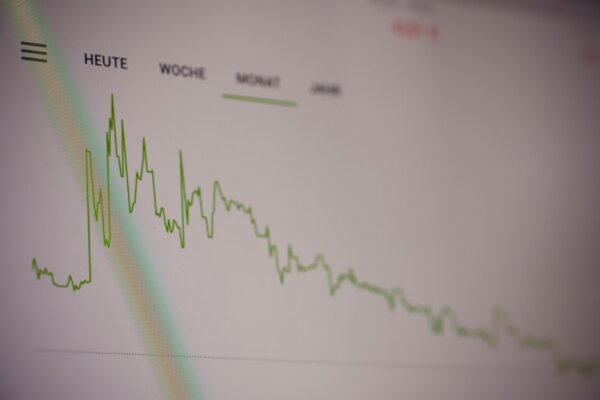
The tech world held its breath this morning as Nvidia (NVDA), the undisputed titan of AI chips, experienced a precipitous 15% drop in its stock value overnight. This sudden downturn sent shockwaves through the market, immediately igniting a fervent debate among investors, analysts, and tech enthusiasts: are we witnessing the first signs of the much-feared AI bubble bursting, or is this merely a routine, albeit sharp, market correction?
For years, Nvidia has been a darling of Wall Street, its stock price soaring on the back of insatiable demand for its graphics processing units (GPUs), which are the computational backbone of modern artificial intelligence. Its valuation has reached unprecedented heights, fueled by projections of exponential growth in AI adoption. This recent plunge, however, forces a critical examination of whether that growth has been priced in too aggressively, or if the underlying fundamentals remain robust enough to weather the storm.
The Immediate Aftermath: What Triggered the Plunge?
While a 15% drop in a single trading session is significant for a company of Nvidia’s stature, pinpointing a singular cause can be complex. Initial reports suggest a confluence of factors contributing to the sell-off. One prominent theory points to a slightly softer-than-expected revenue guidance for the next quarter, despite strong current earnings. Even a minor deviation from the hyper-growth expectations that have propelled Nvidia’s stock can trigger a sharp reaction as investors, particularly those heavily invested in growth stocks, quickly re-evaluate their positions.
Another contributing factor could be a broader market sentiment shift, perhaps influenced by rising interest rate concerns or geopolitical tensions that often lead investors to de-risk their portfolios by selling off high-valuation tech stocks. Analyst downgrades or profit-taking by large institutional investors after a prolonged period of gains could also amplify the downward pressure. Regardless of the immediate trigger, the event underscores the inherent volatility in high-growth sectors like AI, where investor confidence can be as fragile as it is fervent.
The “AI Bubble” Argument: Overvaluation and Hype?
The spectacular rise of AI stocks, with Nvidia at its forefront, has inevitably drawn comparisons to historical tech bubbles, most notably the dot-com bust of the early 2000s. Critics of the current AI boom argue that valuations have detached from reality, driven more by speculative fervor and future promises than by current profitability or sustainable business models. Nvidia’s price-to-earnings (P/E) ratio, while justifiable to some given its market dominance and growth prospects, has been significantly higher than the broader market average, raising red flags for those wary of overvaluation.
The “AI bubble” hypothesis suggests that many companies, including some beneficiaries of the AI wave, are experiencing inflated stock prices based on hype rather than fundamental value. If this is indeed a bubble, then Nvidia’s 15% plummet could be the initial pinprick, signaling a broader correction across the entire AI ecosystem. Investors holding this view might see the dip as validation that the market is finally recalibrating its expectations for AI’s immediate commercialization and profitability.
The “Market Correction” Argument: Healthy Retracements and Fundamentals
Conversely, many seasoned investors and analysts view this event not as a bubble bursting, but as a healthy and perhaps overdue market correction. A correction is typically defined as a 10% or more drop in a market index or an individual stock from its recent peak, and such events are a normal part of healthy market cycles. After an extended period of parabolic growth, a pullback can be beneficial, shaking out weaker hands and re-establishing a more sustainable growth trajectory.
Proponents of the “market correction” theory emphasize Nvidia’s robust fundamentals. The company remains the undisputed leader in AI chip technology, with significant intellectual property, a vast developer ecosystem, and critical partnerships across data centers, automotive, and enterprise AI. The long-term demand for AI infrastructure is projected to remain incredibly strong, irrespective of short-term market fluctuations. This perspective suggests that the 15% drop is a temporary repricing event, offering a potential buying opportunity for long-term investors who believe in the enduring power and transformative potential of AI technology.
What Does This Mean for Investors and the AI Industry?
For investors, Nvidia’s sudden drop serves as a potent reminder of the inherent risks and rewards in high-growth technology sectors. It underscores the importance of a diversified portfolio and a long-term investment horizon. Short-term volatility is a given, especially for stocks that have seen rapid appreciation. Trying to time the market perfectly is notoriously difficult; instead, focusing on the underlying business fundamentals and the broader industry trends can offer more resilient strategies.
For the AI industry as a whole, this event, whether a correction or a sign of a larger trend, highlights the transition from pure hype to the imperative of real-world application and profitability. Companies that can demonstrate tangible returns on their AI investments and sustainable business models are likely to thrive, while those built on speculative promises may struggle. The demand for AI computing power isn’t disappearing; if anything, it’s accelerating. Nvidia’s position at the core of this revolution remains formidable, even if its stock price experiences temporary turbulence.
Conclusion: Navigating the Uncertainty
Nvidia’s 15% overnight plummet has undoubtedly rattled confidence, but whether it signifies the bursting of an AI bubble or a healthy market correction remains a subject of intense debate. While the rapid rise of AI stocks has certainly introduced elements of speculation, Nvidia’s fundamental position as a critical enabler of the AI revolution is undeniable. This event reminds us that even the strongest companies are subject to market forces and investor sentiment.
As the dust settles, investors will be closely watching Nvidia’s next moves and the broader market’s reaction. What is clear is that the future of AI is still incredibly bright, and companies like Nvidia will continue to play a pivotal role. For those invested in the long-term vision of AI, patience and a focus on core value will be paramount. Stay informed, evaluate fundamentals, and consider your long-term investment strategy. The AI journey is far from over, and its path, like any revolutionary technology, will undoubtedly have its share of peaks and valleys.