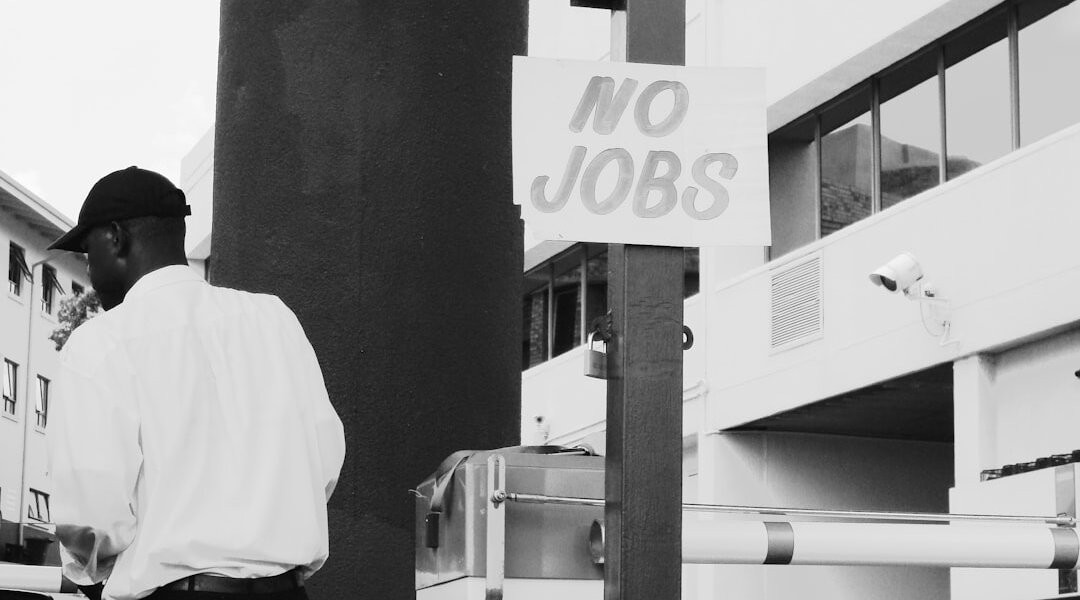
Photo by Hennie Stander on Unsplash
The global economy is experiencing significant tremors, with a wave of job cuts sweeping across major industries. While not a literal 24-hour event, the sheer volume and continuous nature of recent layoff announcements in tech, manufacturing, and services create a sense of an “economic quake,” leaving thousands jobless and sparking urgent debates: Are these isolated adjustments, or are they the precursors to a full-blown recession?
The Unsettling Landscape of Job Cuts
The first half of 2026 has been marked by a notable increase in workforce reductions, even as overall U.S. layoffs saw a 40% drop compared to an outlier 2025. Still, the 443,604 job cuts announced in the first six months of 2026 represent the second-highest first-half total since 2020. As of early July 2026, an average of approximately 978 jobs have been lost daily across various sectors.
The technology sector remains the epicenter of this restructuring. Tech firms announced 15,503 cuts in June alone, contributing to a staggering 139,156 job eliminations in the first half of 2026 – an 83% increase from the previous year. A significant driver for these cuts is Artificial Intelligence (AI), cited in 101,743 job announcements this year, representing 23% of all cuts and rising to 31% in June. Giants like Oracle, for instance, eliminated 25,254 roles due to “AI-driven restructuring initiatives,” while Amazon cut 16,600, Microsoft 4,800, and Dell reduced its workforce by about 11,000 employees. Cloud computing and SaaS companies are particularly affected, with the U.S. leading globally in tech layoffs.
The manufacturing sector presents a mixed, yet concerning, picture. While the industry saw gains of 7,000 jobs in May and 3,000 in June 2026, this follows a significant loss of 108,000 jobs during the first year of President Trump’s second term (early 2025-early 2026), largely attributed to tariff-related uncertainties. Manufacturing unemployment ticked up to 550,000 workers in June, and the sector’s share of nonfarm payrolls hit a new record low of 7.92%. Even a snack maker, Nature’s Bakery, announced the closure of a manufacturing plant, impacting hundreds of employees as operations shift.
The services sector, though showing a 56% decrease in year-to-date cuts compared to a high-layoff period in 2025, is not immune. Sub-sectors like healthcare (33,175 cuts) and transportation (40,970 cuts) experienced significant reductions in the first half of 2026. Professional services are also witnessing a slowdown in white-collar hiring, and broader “consumer services” companies are reshaping operations due to automation and changing economic conditions.
The Forces Behind the Cuts: AI, Inflation, and Geopolitics
Several intertwined factors are fueling this wave of layoffs:
- AI-Driven Restructuring: Artificial intelligence is not just a buzzword; it’s a transformative force. Companies are aggressively restructuring, automating roles, and reallocating budgets towards new AI capabilities, leading to significant workforce displacement across tech, finance, logistics, consulting, media, retail, and manufacturing.
- Economic Uncertainty and High Interest Rates: A challenging economic environment, characterized by persistent inflation and elevated interest rates, is pushing companies to cut costs and streamline operations. This creates a “low-hire, low-fire equilibrium” in the labor market, where job growth is modest and hiring remains cautious.
- Geopolitical Tensions and Tariffs: Ongoing geopolitical conflicts, such as the situation in the Middle East, are causing supply chain disruptions and driving up energy and food prices, which in turn fuels inflation. Additionally, tariff-related uncertainties have significantly impacted the manufacturing sector, contributing to job losses.
Reading the Economic Tea Leaves: Are We Heading for a Downturn?
The question of a looming recession is on everyone’s mind, and economic indicators present a complex, at times contradictory, picture. Consumer sentiment is undeniably pessimistic, with 57% of Americans rating the U.S. economy as “bad” in June 2026, a significant increase from earlier in the year. Assessments of the U.S. job market also continue to decline.
However, economists are divided. A World Economic Forum survey in May 2026 found that while 89% of chief economists expect global growth to weaken, 58% do *not* foresee an imminent global recession within the next year. Some key recession indicators, like nonfarm employment, are at an all-time high, suggesting resilience. Yet, real retail sales and real personal income are off their peaks, and unemployment, while still relatively low at 4.3% in January 2026, had risen in 2025. The concern isn’t necessarily a sharp, immediate downturn, but rather a “weaker, more volatile economy with limited short-term gains in resilience.”
Navigating the Shifting Sands
The current economic climate is one of profound transition, driven by technological advancement and global complexities. While a definitive recession call remains elusive, the widespread layoffs signal a significant recalibration across industries. The job market is undoubtedly challenging, with a premium placed on adaptability and new skills.
For individuals, this means a renewed focus on upskilling and reskilling, particularly in areas augmented by AI. For businesses, it necessitates strategic investments in innovation and efficiency, while also prioritizing workforce development. Staying informed about economic trends and industry shifts will be crucial for navigating these turbulent times. The economic quake is real; how we respond will determine our resilience.