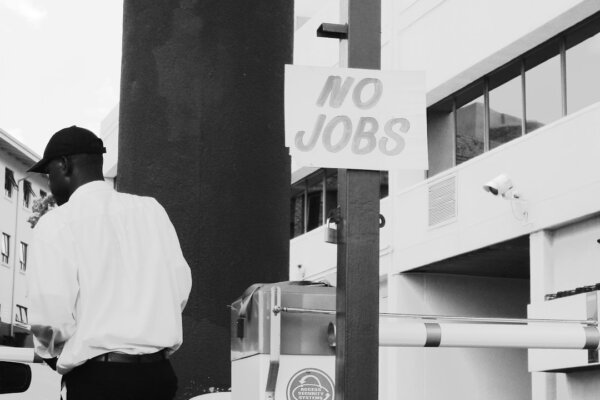
Photo by Markus Spiske on Unsplash
The Great Purge: Thousands Axed Across Tech, Manufacturing, and Services in a Concentrated Wave
The global economy is undergoing a seismic shift, marked by a recent, concentrated wave of job cuts that has reverberated through some of its most pivotal sectors: technology, manufacturing, and services. What felt like a “Great Purge” saw thousands of skilled professionals and experienced workers abruptly exiting their roles, leaving many to question the stability of the modern workforce and the direction of industrial evolution. This isn’t merely a cyclical downturn; it’s a complex confluence of economic pressures, rapid technological advancement, and strategic corporate realignments that are fundamentally reshaping the employment landscape.
Economic Headwinds and Post-Pandemic Corrections
One of the primary drivers behind this mass workforce reduction is a challenging economic environment. The exuberance of the post-pandemic boom, particularly in the tech sector, led to significant over-hiring as companies scrambled to meet unprecedented demand for digital services. As global economic growth slowed, inflation persisted, and interest rates climbed, many firms found themselves with bloated payrolls unsustainable in a more conservative financial climate.
Companies are now aggressively focused on
cost reduction
and
efficiency optimization
to appease investors and secure their bottom lines. This often means making difficult decisions about headcount, especially for longer-serving employees with higher salaries or recent hires who haven’t yet proven their long-term value. The ripple effect of these macroeconomic pressures extends beyond tech, impacting industries across the board as consumer spending patterns normalize and supply chain complexities continue to evolve.
The AI Revolution: Reshaping Job Functions and Skill Demands
Perhaps the most transformative force at play is the accelerating adoption of
Artificial Intelligence (AI)
and
automation
. While AI promises unprecedented productivity gains and new job creation in specialized fields, it also undeniably displaces existing roles, particularly those involving routine or administrative tasks.
In the
tech sector
, this translates to a
skills realignment
. Companies are shedding roles deemed less critical or automatable, while simultaneously seeking talent proficient in AI development, data analytics, and machine learning. For manufacturing, automation has been a long-term trend, but the current wave of advanced robotics and smart factories is accelerating the shift away from low-skilled labor towards roles requiring technical expertise in operating and maintaining complex machinery. Even the
services sector
, traditionally reliant on human interaction, is seeing call centers and administrative functions increasingly augmented or replaced by AI-powered chatbots and intelligent systems.
This isn’t always about outright job destruction; sometimes, it’s about job transformation. However, the pace of change demands rapid
reskilling
and
upskilling
from the existing workforce, a challenge many individuals and organizations are struggling to meet.
Sector-Specific Vulnerabilities and Strategic Shifts
- Tech Sector: Beyond over-hiring, many tech giants are undergoing
strategic shifts
to prioritize core competencies and emerging technologies like AI. This often leads to the divestment of non-core projects and associated teams. The “social contagion” effect, where companies imitate competitors’ layoff announcements, also plays a role in the rapid succession of job cuts.
- Manufacturing Sector: The long-term trend of
manufacturing job losses
due to technological progress and global competition continues. While overall manufacturing output may remain stable or even grow, the number of human workers required per unit of output decreases significantly. Companies are also relocating or restructuring supply chains, further impacting employment.
- Services Sector: This broad category is experiencing a dual impact. On one hand, economic slowdowns reduce demand for various services. On the other, digital transformation and automation are making many back-office and customer-facing roles redundant. Outsourcing firms, in particular, are under pressure to reskill their workforce to meet evolving client demands for digital services.
Navigating the New Normal: A Call to Action
The “Great Purge” serves as a stark reminder of the dynamic and often unforgiving nature of the modern economy. While job losses are undoubtedly painful for individuals and families, they also signal a broader
economic restructuring
towards a more automated and digitally driven future. It’s a period of significant uncertainty, but also one ripe with opportunity for those who adapt.
For individuals, the imperative is clear: embrace
lifelong learning
and acquire skills that complement, rather than compete with, AI and automation. Focus on creativity, critical thinking, complex problem-solving, and emotional intelligence—skills that remain uniquely human. For businesses, the challenge lies in fostering a culture of continuous learning and investing in their existing workforce’s development, rather than simply discarding talent. Policymakers must also step up, creating robust social safety nets and
reskilling programs
that ease transitions for displaced workers and prepare the next generation for the jobs of tomorrow. The future of work isn’t about eliminating humans; it’s about redefining our role in an increasingly intelligent world. Let’s ensure this transformation is equitable and empowering for all.