Photo by Leif Christoph Gottwald on Unsplash
The artificial intelligence revolution has captivated the tech world, promising unprecedented innovation and efficiency. Yet, beneath the dazzling headlines and product demos, a more sobering reality is emerging: the true cost of building and sustaining this AI future. Recent Q2 earnings reports from industry titans Google, Amazon, and Microsoft are offering a glimpse into the colossal investments required, exposing the financial muscle flexing behind their cloud kingdoms’ AI ambitions. For a tech-savvy audience, understanding these underlying economics is crucial to grasping the future trajectory of the and landscape.
The AI Arms Race: Billions Poured into Infrastructure
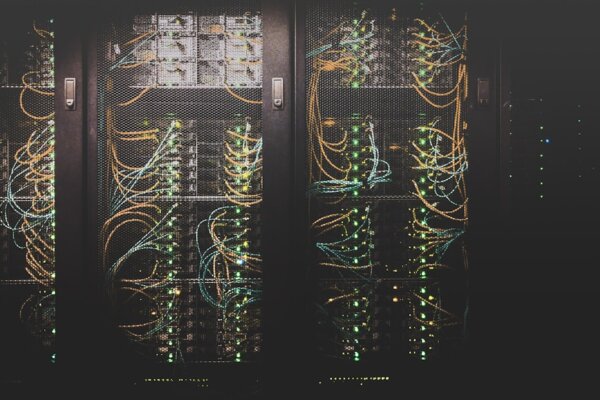
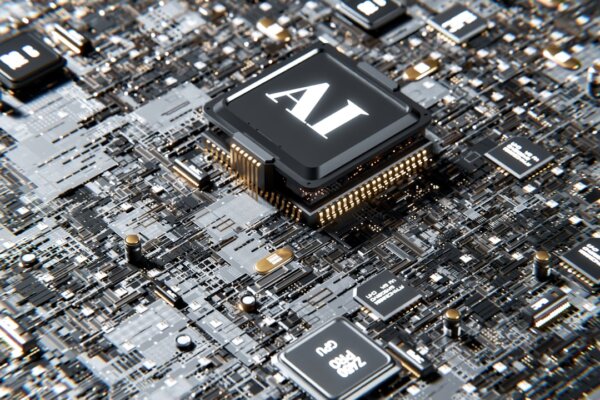
The pursuit of AI dominance has ignited an unprecedented capital expenditure (CapEx) race among the hyperscale cloud providers. Google, Amazon, and Microsoft are pouring staggering sums into infrastructure, primarily to construct and upgrade facilities with specialized hardware essential for AI workloads. Amazon, for instance, is projected to spend approximately $200 billion on capital expenditures in 2026 alone, with a significant portion dedicated to its infrastructure for Amazon Web Services (AWS). Similarly, Google committed $75 billion in CapEx for 2025, a 43% increase from the previous year, with much of it targeting custom Tensor Processing Unit (TPU) chips and new data centers to power Google Cloud and its Gemini AI models. Microsoft isn’t far behind, earmarking roughly $190 billion in CapEx for 2026 to bolster its Azure and Copilot AI services. The combined capital expenditure of these tech giants on AI and infrastructure in 2026 is expected to exceed $700 billion, underscoring the sheer scale of this industry-wide build-out.
These investments aren’t just about building more servers; they’re about building highly specialized, energy-intensive environments. AI data centers consume 3-5 times more power per square foot than traditional facilities, with a single AI server rack demanding 50-150 kilowatts compared to 10-15 kilowatts for conventional computing. Modern Graphics Processing Units (GPUs), the workhorses of computation, consume 700-1,200 watts per chip, a substantial increase over traditional CPUs. This surge in power demand is leading to significant strains on energy grids and raising questions about sustainability, with U.S. data centers projected to consume 426 TWh by 2030, a 133% increase from 2024. Globally, data center electricity consumption is set to double by 2030, reaching almost 3% of total global electricity consumption. These escalating energy costs represent a significant component of the “true cost” of that will continue to impact cloud providers’ bottom lines.
Cloud’s Shifting Sands: Margin Pressures and Optimization Challenges
The traditional computing business model, known for its high-margin Software-as-a-Service (SaaS) offerings, is facing new pressures from the integration of . While SaaS companies typically enjoy gross margins of 70-80%, AI-centric businesses often operate with margins closer to 50-60%. This margin compression is largely due to the higher operational costs associated with workloads, particularly inference costs, which can account for roughly 23% of total revenue for scaling-stage AI B2B companies.
Q2 earnings reports have begun to reflect this reality. Microsoft, for example, saw its capital expenditure reach $37.5 billion in a recent quarter, primarily driven by -ready compute and investments. Consequently, its cloud gross margins dipped, with management guiding for Microsoft Cloud gross margin to hover around 65% in the near term as these investments continue. This indicates that while demand for services is robust, the cost of delivering these services is significantly higher, requiring providers to carefully balance competitive pricing with profitability. Analysts like Goldman Sachs are already warning that while the spending boom is boosting profits now, it could eventually pressure returns for the technology giants due to the massive CapEx absorption.
Beyond the Balance Sheet: Long-Term Strategic Plays
Despite the immediate financial headwinds, the aggressive investments by Google, Amazon, and Microsoft are not merely a defensive reaction but a calculated long-term strategic play. These companies view as a “once-in-a-lifetime opportunity” that will redefine competitive advantage and drive future growth across all their segments, especially their divisions. By building out superior infrastructure, they aim to attract and retain enterprise customers seeking powerful capabilities, thereby solidifying their ecosystem lock-in.
The investments also extend to the fierce “AI talent war.” Top AI/ML scientists and researchers are commanding staggering compensation packages, with some offers reaching hundreds of millions or even a billion dollars over several years. This talent is crucial for developing proprietary models, optimizing hardware, and creating innovative services that differentiate their cloud platforms. Companies are spending billions on infrastructure not just for compute, but also to create the cutting-edge research environments demanded by elite talent. The long-term vision is that these upfront costs will yield higher-margin services, improved operational efficiencies, and entirely new revenue streams that justify the massive outlay. The question for investors and analysts moving forward will be how quickly these strategic bets translate into tangible, sustained profitability beyond the current infrastructure build-out phase.
Conclusion: The Cost of Future Innovation
Q2 earnings have served as a powerful reminder that the revolution, while transformative, comes with a substantial price tag. Google, Amazon, and Microsoft are collectively investing hundreds of billions into infrastructure, specialized chips, and top-tier talent, leading to increased capital expenditures and pressure on cloud margins. These costs reflect not just the technological complexity of , but also the strategic imperative for these tech giants to lead the next era of computing. While the immediate financial impact is clear, these investments are foundational to their long-term growth and competitive standing. As the landscape continues to evolve, the ability to innovate efficiently and translate massive CapEx into sustained, profitable growth will be the ultimate test for these cloud kingdoms.
Stay informed on how these investments shape the future of technology and consider how solutions might impact your own business. Explore the latest offerings and their capabilities to understand the evolving market dynamics.