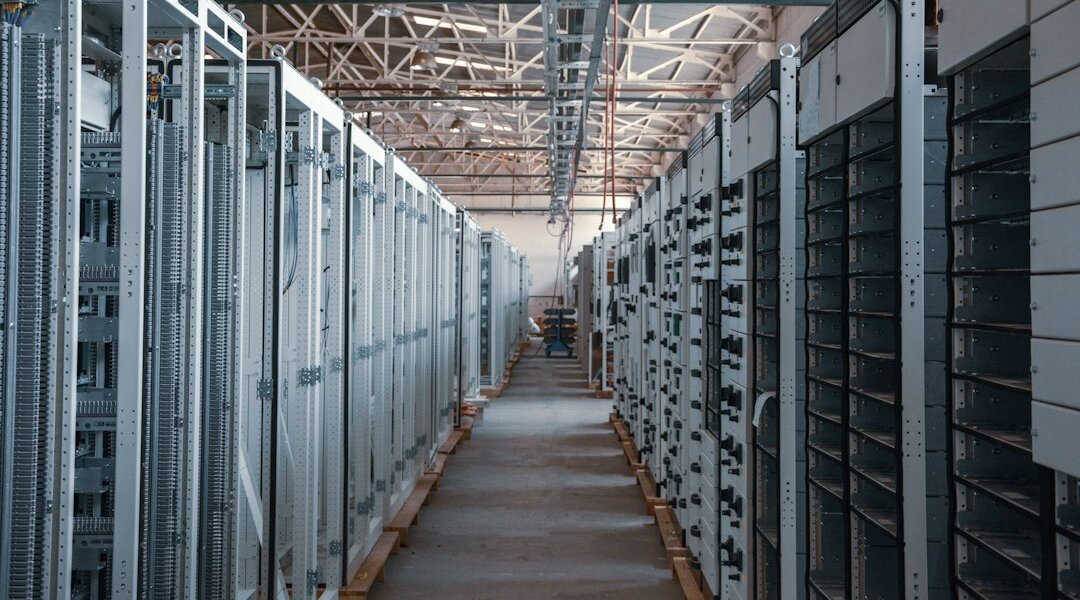
Photo by İsmail Enes Ayhan on Unsplash
When the tech world learned of Jensen Huang’s sudden resignation following personal controversies and geopolitical scrutiny, Wall Street reacted with classic reflex: panic first, ask questions later. For more than three decades, the charismatic, leather-jacketed co-founder was not just the chief executive of Nvidia—he was the living avatar of the artificial intelligence revolution. As headlines seized upon the scandal and shares wobbled under intense speculative pressure, skeptics quickly questioned whether the world’s most dominant semiconductor titan could maintain its altitude without its visionary at the controls.
Yet, astute investors know that sensational executive turmoil often manufactures the exact disconnect between market sentiment and underlying reality that long-term capital dreams of. A company’s true value does not vanish because of personal executive missteps. The long-term bull thesis has never relied exclusively on Jensen Huang’s charisma; it rests on insurmountable architectural moats, complete ecosystem lock-in, and insatiable global compute demand. For discerning tech investors, this controversy has opened up a compelling Nvidia stock opportunity—and Nvidia’s latest blowout Q3 financial results deliver the definitive receipts.
The Jensen Scandal: Separating Sensational Noise from Enterprise Reality
The abrupt fallout surrounding Huang’s exit created an emotional shockwave across financial media. Allegations regarding personal indiscretions and related national security chatter triggered an immediate sentiment penalty on the stock. Skeptics wondered aloud if board investigations, looming Congressional committee questions, or a sudden C-suite vacuum would derail product roadmaps and chill customer relationships.
However, an objective look behind the media circus reveals a very different corporate reality. Nvidia’s board moved decisively, installing veteran Chief Financial Officer Colette Kress as interim CEO. More importantly, comprehensive reviews confirmed that corporate governance held firm and proprietary technological blueprints were never compromised. Hyperscalers like Microsoft, Alphabet, Meta, and Amazon do not sign multi-billion-dollar infrastructure contracts based on CEO celebrity; they deploy capital based on computational efficiency, thermal performance, and enterprise-grade software compatibility.
History repeatedly demonstrates that when elite mega-cap companies experience non-operational, leadership-driven drawdowns, the market systematically overdiscounts the bad news. The loss of a founder is a narrative setback, but it does not diminish the operational machinery or the thousands of top-tier chip architects, network engineers, and compiler specialists driving Nvidia forward daily.
The Proof in the Numbers: Unpacking a Historic Q3 Earnings Print
If critics thought executive distraction would crack Nvidia’s business fundamentals, the Q3 fiscal results delivered a masterclass in operational resilience. In its first financial report following Huang’s departure, Nvidia did not merely beat expectations—it annihilated them across every core operational metric.
- Record Revenue: Nvidia posted quarterly revenue of $115.84 billion, representing a staggering 103% year-over-year surge and a 20% sequential gain, leaving consensus estimates of roughly $109 billion far behind.
- Data Center Hegemony: The Data Center segment generated an eye-watering $107.6 billion—up 110% compared to the prior-year period—demonstrating that global enterprise appetite for AI cluster deployments continues to accelerate rather than crest.
- Unshakable Profitability: Adjusted diluted earnings per share reached $2.68 (beating forecasts of $2.48), while non-GAAP gross margins remained elite at 74.9%, highlighting unyielding pricing power.
- Jaw-Dropping Capital Returns: Backed by $43.77 billion in free cash flow generated during the quarter alone, Nvidia returned $28.1 billion to shareholders through repurchases and dividends, bolstered by an additional $150 billion share buyback authorization.
Guidance for the subsequent quarter was projected at an unprecedented $130 billion, even while fully modeling zero revenue contributions from restricted overseas markets. These figures definitively close the door on arguments that demand is slowing down. The earnings engine is not stalling; it is operating at peak mechanical performance.
The True Moat: CUDA, Silicon Co-Design, and Full-Stack Monopolies
Why is Nvidia’s financial fortress so impervious to executive disruption? The answer lies in a technological moat built methodically over more than two decades—one that competitors like AMD, Intel, and bespoke ASIC accelerators still cannot dismantle.
Nvidia’s moat begins with hardware, but it is cemented by software. The proprietary CUDA (Compute Unified Device Architecture) computing platform has become the ubiquitous native language of modern machine learning. Over five million developers worldwide have built their frameworks, libraries, mathematical optimizations, and training pipelines on top of CUDA. Porting massive frontier model workloads to rival architectures remains fraught with developer friction, compilation bottlenecks, and substantial latency penalties. Enterprises simply cannot risk rewriting foundational software stacks when speed-to-market determines survival.
Furthermore, Nvidia no longer merely sells standalone GPUs; it sells whole data centers as integrated supercomputers. Through its high-speed NVLink interconnects, InfiniBand technology, and Quantum networking switches, Nvidia delivers complete silicon racks—exemplified by the Blackwell ramp-up and the explosive debut of the Vera Rubin NVL72 platform. A rival might attempt to benchmark a single accelerator chip against Nvidia silicon, but replicating the coordinated communication of 72 liquid-cooled processors operating as a single unified GPU is a gargantuan engineering task.
Navigating the Entry Point: Why the Valuation Pullback Creates Value
For months, prospective investors lamented that Nvidia was “too expensive,” trading at multiples that left no margin for error. The sentiment-driven discount triggered by Huang’s exit has altered that equation in favor of long-term buyers.
While the leadership change introduces temporary uncertainty regarding long-term corporate identity, the institutional bench is exceptionally deep. Colette Kress has steered the company’s financial operations through multiple semiconductor cycles, and the engineering divisions remain led by the veterans who designed the Blackwell and Rubin architectures. When paired with the company’s newly authorized $150 billion share repurchase plan, management possesses the exact dry powder needed to aggressively retire discounted shares and boost future EPS.
Risks certainly exist—ranging from ongoing geopolitical export restrictions to upcoming Capitol Hill testimonies—but none of these threaten the enterprise-level indispensability of Nvidia’s core technology. At its core, the foundational infrastructure for artificial intelligence, autonomous robotics, quantum computing simulations, and sovereign enterprise clouds still runs almost exclusively on Nvidia silicon.
Conclusion: Focus on the Fortress, Not the Noise
Sensational leadership scandals are tailor-made for viral headlines, but structural economic moats determine shareholder returns. Jensen Huang’s exit marks the conclusion of an era, but Nvidia was deliberately designed to become an enduring institution rather than an ephemeral persona.
With $115.8 billion in quarterly revenue, near-75% gross margins, and unmatched software lock-in, Nvidia’s fundamentals have never appeared more bulletproof. When short-term panic temporarily depresses the stock price of a world-defining monopoly, historical precedent is clear: it represents a standout window for strategic accumulation.
Are you taking advantage of the recent turbulence to add to your position, or are you waiting for the executive dust to settle? Share your outlook in the comments below, and don’t forget to subscribe to our technology investment newsletter for in-depth architectural breakdowns and market analysis.