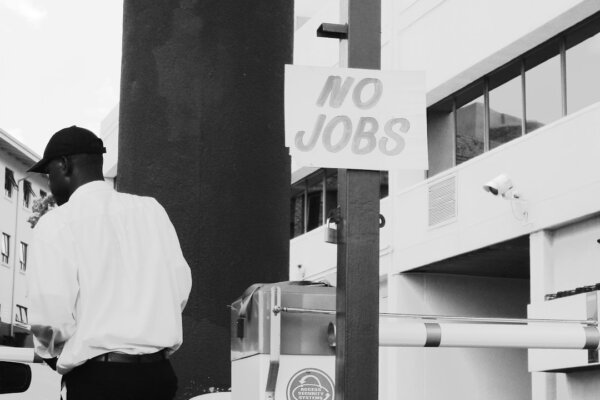
Photo by Ra Dragon on Unsplash
In an increasingly interconnected global economy, the news cycles are often dominated by a single, prevailing narrative. Yet, recently, a more complex and unsettling story has emerged: a seemingly synchronized wave of layoffs impacting not one, but three foundational sectors – technology, manufacturing, and services. This convergence has sparked urgent questions and intense debate among economists, technologists, and the general public alike: Are these job losses the harbinger of an AI apocalypse, where intelligent machines render human labor obsolete, or are they simply the painful symptoms of an impending ? The truth, as often is the case, is likely a nuanced blend of both.
The Tech Sector’s Shifting Sands: Efficiency and Realignment
For years, the technology industry was synonymous with explosive growth, lavish perks, and a seemingly insatiable demand for talent. The pandemic era further amplified this, leading to significant overhiring by many tech giants and startups alike. Now, the tide has turned. Companies that once expanded aggressively are now rightsizing, often citing “efficiency” as a key driver for workforce reductions. While some of these layoffs are undoubtedly a correction to unsustainable growth, a significant undercurrent points to the growing maturity and application of advanced AI technologies. Large Language Models (LLMs) and other AI tools are streamlining processes, automating tasks, and enabling smaller teams to achieve what previously required larger workforces. The focus has shifted from hyper-growth to profitability and operational leverage, and AI is increasingly seen as a powerful tool to achieve this.
Manufacturing’s Robotic Revolution: Beyond the Assembly Line
The manufacturing sector has long grappled with . From the early days of mechanization to the widespread adoption of industrial robots, the drive for efficiency and cost reduction has been relentless. However, the current wave of job displacement in manufacturing is more sophisticated. Advanced robotics, coupled with AI-driven predictive maintenance, smart factories, and highly automated supply chains, are not just replacing repetitive tasks but are beginning to impact roles requiring more complex decision-making and oversight. Global supply chain disruptions and geopolitical shifts are also pushing companies to onshore or “friendshore” production, often with a heavier reliance on automated processes to offset higher labor costs. This dual pressure of economic uncertainty and technological advancement means that while production might move, the jobs associated with it are increasingly being performed by machines.
Services Under Pressure: The Digital Transformation of Daily Life
Historically, the service sector was considered somewhat insulated from the direct impact of automation, particularly roles requiring human interaction, empathy, or complex problem-solving. However, this perception is rapidly changing. AI-powered chatbots are handling customer service inquiries, intelligent automation is streamlining back-office operations like accounting and HR, and even creative fields are seeing AI generate content, designs, and code. The pursuit of greater efficiency and personalized experiences is driving this digital transformation, but it also means that many routine or even semi-routine service jobs are becoming vulnerable. As consumers increasingly interact with businesses through digital channels, the demand for human intermediaries in many roles is diminishing, putting immense pressure on the /jobmarket in this vast sector.
Navigating the New Normal: Strategies for Resilience
The confluence of these factors presents a complex challenge. It’s not a simple case of AI versus the economy, but rather a dynamic interplay where economic pressures accelerate AI adoption, and AI, in turn, reshapes economic landscapes. For individuals, this means a renewed emphasis on and . Lifelong learning, focusing on uniquely human skills like critical thinking, creativity, emotional intelligence, and complex problem-solving, becomes paramount. For businesses, it necessitates strategic investment in AI not just for cost-cutting, but for innovation and the creation of new, higher-value roles. Policymakers face the daunting task of designing social safety nets and educational frameworks that can adapt to a rapidly evolving job market.
Conclusion: Beyond the Apocalypse Narrative
While the “AI Apocalypse” makes for a compelling headline, the reality of the current layoff wave is far more nuanced. It’s a powerful reminder that technological progress and economic cycles are deeply intertwined. The triple threat impacting tech, manufacturing, and services simultaneously highlights a period of profound restructuring, not necessarily an end to work, but a radical transformation of what work entails and who performs it. The challenge for us all is to move beyond fear-mongering and towards proactive strategies that foster adaptability, innovation, and a more equitable distribution of the benefits of advanced technology. What steps will you take to prepare for this evolving future? Share your thoughts and strategies in the comments below.