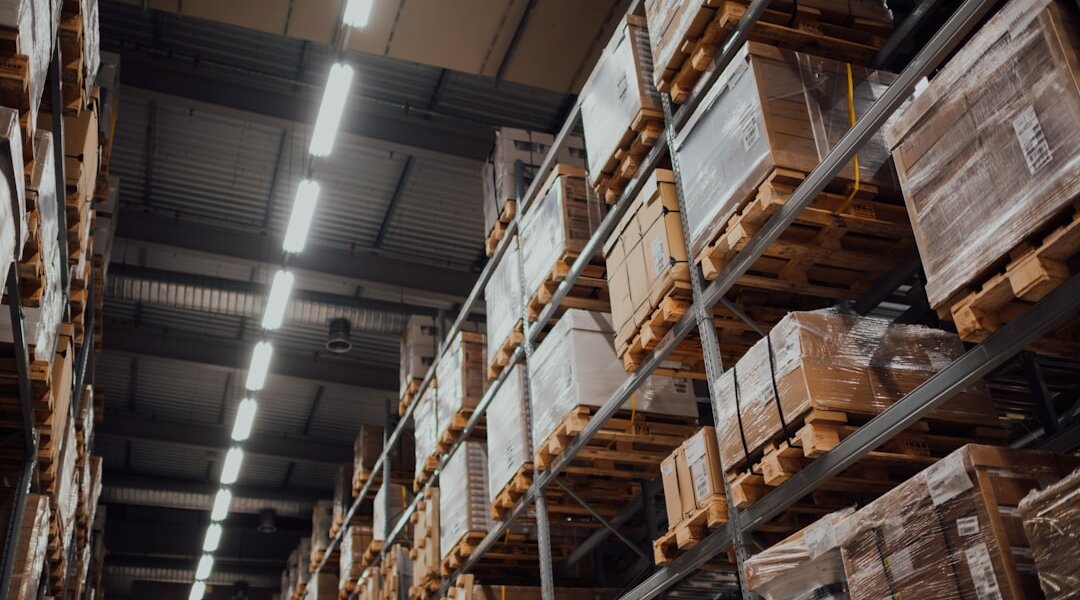
Photo by CHUTTERSNAP on Unsplash
Amazon’s AI Revolution: How a New Logistics System is Reshaping Global Supply Chains
For years, Amazon has been synonymous with rapid delivery and logistical prowess. Now, the e-commerce giant is poised to unleash its latest “secret weapon”: a revolutionary, AI-powered logistics system designed to redefine global supply chains overnight. This isn’t just an incremental upgrade; it’s a fundamental shift in how goods move across the planet, promising unparalleled efficiency, speed, and resilience. For businesses and consumers alike, the implications are nothing short of transformative.
The Brain Behind the Operation: How AI is Transforming Logistics
At the heart of Amazon’s new system lies a sophisticated suite of artificial intelligence and machine learning algorithms. This advanced AI isn’t simply automating existing processes; it’s orchestrating an intelligent network capable of real-time decision-making on an unprecedented scale. Imagine a logistics system that can predict demand with uncanny accuracy, optimizing inventory placement long before an order is even placed. This predictive analytics capability minimizes stockouts and overstocking, ensuring products are exactly where they need to be, precisely when they’re needed.
Beyond forecasting, the system leverages AI for dynamic route optimization, constantly adjusting delivery paths based on live traffic, weather conditions, and even unexpected disruptions. This means fewer delays, reduced fuel consumption, and a smaller carbon footprint. Furthermore, warehouse automation is taken to the next level, with AI-driven robots and autonomous vehicles coordinating seamlessly to manage vast inventories and expedite order fulfillment. The entire process, from the moment a product leaves a supplier to its arrival at a customer’s doorstep, is meticulously monitored and optimized by intelligent algorithms, creating a truly smart logistics ecosystem.
Beyond the Warehouse: Impact on Global Supply Chains
The ramifications of Amazon’s AI-powered logistics extend far beyond its own operations, promising to send ripple effects throughout the global supply chain landscape. For one, it sets a new benchmark for speed and reliability. As Amazon further shrinks delivery windows and enhances service quality, competitors across various industries will be compelled to innovate or risk being left behind. This competitive pressure will likely accelerate the adoption of similar supply chain innovation technologies, driving an industry-wide transformation.
Moreover, the system’s inherent resilience, powered by AI’s ability to quickly adapt to disruptions, offers a crucial advantage in an increasingly unpredictable world. Whether facing natural disasters, geopolitical shifts, or unexpected surges in demand, the AI can reroute, reallocate, and reorganize resources to maintain continuity. This enhanced agility is a game-changer for businesses struggling with traditional, rigid supply chains. It also has significant implications for global trade, potentially fostering greater efficiency and reducing the cost of international shipping, making cross-border commerce more accessible and reliable for businesses of all sizes.
The Road Ahead: Challenges and Opportunities
While the promise of Amazon’s AI-driven logistics is immense, its widespread implementation will not be without challenges. Data privacy and security, for instance, become paramount as vast amounts of information are processed and shared across the network. The ethical implications of AI decision-making, particularly concerning labor and job displacement, will also require careful consideration. However, these challenges are outweighed by the sheer scale of opportunities this technology presents.
For businesses, it’s an invitation to rethink their own logistics strategies, embracing data-driven insights and e-commerce technology to gain a competitive edge. Startups in the logistics tech space will find fertile ground for innovation, developing complementary solutions that integrate with or enhance these advanced systems. For consumers, it means faster, more reliable, and potentially more sustainable delivery options. The future of logistics is here, and it’s intelligent, interconnected, and moving at Amazon speed.
Conclusion: The Future of Commerce, Delivered by AI
Amazon’s new AI-powered logistics system isn’t just an upgrade; it’s a declaration of intent, signaling a new era for global commerce. By harnessing the full potential of artificial intelligence, Amazon is not only optimizing its own operations but also setting a formidable standard that will inevitably reshape how products are made, moved, and delivered worldwide. The “overnight” transformation might be an exaggeration in literal terms, but the speed and depth of this change will undoubtedly feel instantaneous to many. We are witnessing the dawn of truly intelligent supply chains, and the journey has just begun.
What are your thoughts on Amazon’s latest AI venture and its potential impact on global supply chains? Share your insights in the comments below!