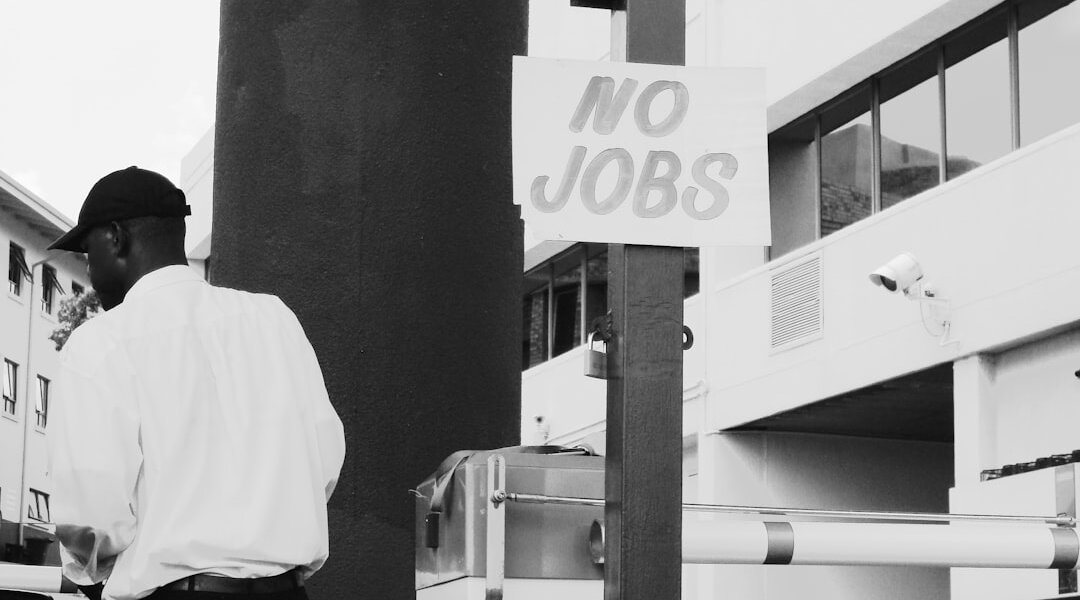
Photo by Hennie Stander on Unsplash
The global economy awoke to a seismic shock this week, as an unprecedented wave of layoffs swept across three pillars of industry: technology, manufacturing, and services. In a single, harrowing day, thousands of employees found themselves out of work, signaling an economic tsunami that promises to reshape industries and redefine the future of employment. This sudden contraction, felt from Silicon Valley boardrooms to factory floors and bustling service centers, has left experts scrambling to understand the multifaceted factors at play and the potential long-term repercussions.
The scale and simultaneous nature of these layoffs are what truly set this event apart. It’s not merely a sector-specific downturn but a widespread retrenchment suggesting deeper systemic shifts. Understanding the immediate impact and preparing for the new economic landscape will be paramount for businesses and individuals alike.
The Tech Sector’s Reckoning: From Boom to Bust
For years, the technology industry seemed immune to economic headwinds, characterized by aggressive hiring, rapid expansion, and seemingly endless venture capital. However, the recent layoffs reveal a stark reality: even tech giants are not invincible. A combination of factors appears to have contributed to this sudden contraction:
- Overhiring During the Pandemic: Many companies scaled up rapidly to meet increased demand for digital services, leading to bloated workforces that are now unsustainable in a post-pandemic world.
- Rising Interest Rates and Cost of Capital: Higher borrowing costs have made investors more cautious, leading to a tightening of funding for startups and a demand for greater profitability from established players.
- Market Correction and Valuation Adjustments: The soaring valuations of recent years are being recalibrated, forcing companies to streamline operations and focus on core competencies.
- Automation and AI Integration: The accelerating pace of AI adoption is beginning to impact roles traditionally performed by humans, particularly in areas like software testing, customer support, and even content generation.
The layoffs in tech are not just about reducing headcount; they represent a strategic shift towards leaner, more efficient models, heavily reliant on automation and specialized skill sets. The emphasis is now firmly on profitability over growth at all costs.
Manufacturing’s Double Whammy: Supply Chains and Automation
The manufacturing sector, already grappling with persistent supply chain disruptions and geopolitical tensions, faced its own significant cuts. For an industry that forms the backbone of global commerce, these layoffs underscore a complex interplay of challenges:
- Persistent Supply Chain Fragility: Ongoing issues with raw material availability, shipping delays, and geopolitical tensions continue to hamper production efficiency and increase costs.
- Accelerated Automation and Robotics: Manufacturers are increasingly investing in robotics and advanced automation to improve efficiency, reduce labor costs, and mitigate future supply chain shocks. This trend, while beneficial for long-term productivity, often leads to immediate job displacement.
- Decreased Consumer Demand: A general economic slowdown and inflationary pressures have led to reduced consumer spending on durable goods, directly impacting production volumes.
- Shifting Global Production Landscapes: Companies are reassessing their global manufacturing footprints, sometimes leading to consolidation or relocation of facilities, which can impact local workforces.
The manufacturing layoffs highlight a critical need for workers to reskill and upskill in areas related to automation management, data analytics, and advanced manufacturing processes to remain relevant in an evolving industrial landscape.
Services Sector Under Pressure: Consumer Spending and Digital Transformation
Often considered resilient, the services sector, encompassing everything from retail and hospitality to professional services, was not spared. These layoffs reflect a confluence of reduced consumer confidence and the ongoing march of digital transformation:
- Reduced Consumer Spending: Inflationary pressures and economic uncertainty are causing consumers to tighten their belts, leading to decreased demand for discretionary services.
- Digitalization and Self-Service: Many service industries are increasingly adopting digital platforms for customer interactions, bookings, and transactions, reducing the need for human intervention in certain roles. Think of AI-powered chatbots replacing call center agents or automated check-ins in hotels.
- Hybrid Work Models: While beneficial for many, the shift to hybrid and remote work has also impacted demand for ancillary services in urban centers, such as office catering, cleaning, and local retail.
The service industry is undergoing a profound transformation, pushing towards more efficient, technology-driven delivery models. This requires a workforce that can adapt to new tools and focus on high-value, personalized interactions that technology cannot yet replicate.
Navigating the Aftermath: Adaptability is Key
The “Economic Tsunami” has delivered a harsh reminder of the interconnectedness of our global economy and the rapid pace of technological change. While the immediate shock is profound, it also presents an opportunity for introspection and adaptation. For individuals, investing in continuous learning, focusing on transferable skills, and exploring emerging fields will be crucial. For businesses, it necessitates a strategic re-evaluation of operational models, a greater emphasis on resilience, and a commitment to fostering a culture of innovation.
The path forward will not be easy, but by understanding the forces at play and proactively preparing for the future, we can navigate these turbulent waters. What steps are you taking to adapt to this evolving economic landscape? Share your thoughts and strategies in the comments below.