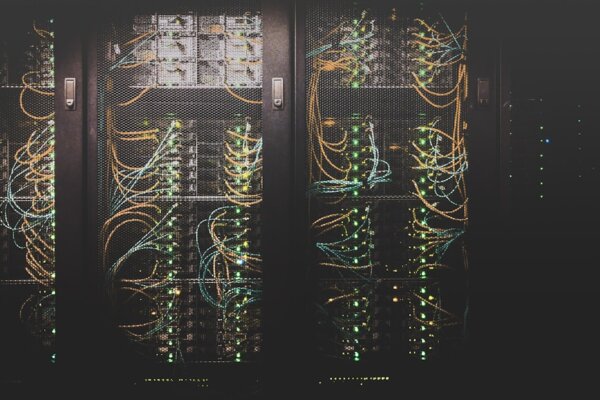
Photo by Braedon McLeod on Unsplash
The first quarter of 2026 has concluded, leaving the technology world abuzz with Big Tech’s latest earnings reports. Artificial intelligence, the undisputed titan of current innovation, is at the heart of this excitement. Companies are pouring unprecedented sums into AI research, development, and infrastructure, and the market is reacting with a mix of euphoria and apprehension. The central question on everyone’s mind: Are these stellar Q1 results fueling a sustainable boom, or are we witnessing the early stages of a dangerous bubble?
The Unprecedented AI-Powered Surge in Q1 2026
Big Tech’s Q1 2026 earnings painted a picture of robust growth, with major players like Microsoft, Alphabet, Amazon, and Meta reporting accelerated core business performance, significantly driven by AI investments. This quarter, the collective AI capital expenditure (CapEx) from these hyperscalers alone is projected to reach an astounding $650 billion to $700 billion for the year, marking a monumental injection into the global economy. This isn’t just speculative spending; it’s an “industrial build-out” designed to support the immense computational demands of AI.
The impact of AI is tangible in revenue streams. Microsoft’s AI business, for instance, is now operating at an impressive $37 billion annualized rate, demonstrating a 123% year-over-year growth. Cloud computing divisions are experiencing remarkable momentum, with Amazon Web Services (AWS) growing 28%, Microsoft Azure approximately 39%, and Google Cloud leading with a substantial 63% growth. This surge indicates a rapidly expanding market for AI compute and storage. Furthermore, AI is proving its worth in enhancing core business functions, from improving ad targeting and user engagement to boosting monetization across various platforms.
Beneath the Hype: The Engines Driving AI’s Expansion
Beyond the impressive top-line numbers, several fundamental shifts are underpinning AI’s current trajectory. The emergence of agentic AI has been a consensus theme across these tech giants, signaling a move towards recurring, usage-based compute demand. This signifies a maturation of AI applications, moving beyond mere experimentation to embedded, value-generating solutions within enterprises. Companies like Anthropic, with its Claude Code reaching a $1 billion revenue run rate in just six months, exemplify the rapid monetization potential of specialized AI tools.
The demand for AI infrastructure is broadening significantly. Dell, for example, saw its AI server revenue grow 2.5 times in fiscal 2026 to $25 billion, with projections to double to $50 billion in the current fiscal year, indicating widespread adoption across various customer types, including “neo clouds, sovereigns, and enterprise customers.” The semiconductor industry, the backbone of AI, continues its meteoric rise. Nvidia reported an staggering 1,600% increase in accelerator revenue over three years, reaching $60.4 billion in the latest March quarter, with Q1 revenue of $81.6 billion largely driven by its data center segment. Other chipmakers like Broadcom and AMD are also experiencing substantial growth, highlighting the foundational nature of this AI build-out.
Navigating the Headwinds: Is a Bubble Brewing?
Despite the undeniable growth, a palpable sense of caution permeates the industry, with many drawing parallels to past tech bubbles. The most significant concern revolves around the widening gap between the colossal investments in AI infrastructure and the current revenue generated from AI services. Analysts anticipate $5 trillion in AI infrastructure spending by 2030, yet current annualized revenues for leading AI companies remain in the tens of billions. Some estimates suggest that AI-related CapEx for 2026 could exceed $400-500 billion in the US alone, while total AI service revenue is still around $12 billion. This “Grand Canyon-sized gap” raises serious questions about the sustainability of current valuations.
Investor sentiment, though largely positive, showed signs of volatility during Q1 earnings. While Alphabet saw gains, Meta and Microsoft shares experienced drops despite beating earnings expectations. This reaction underscores that merely beating numbers is no longer enough; investors are scrutinizing whether the massive spending is generating commensurate returns fast enough. Rising component prices and compute constraints are also adding to the cost of the AI infrastructure build-out, further impacting free cash flow for companies like Amazon.
Environmental concerns also loom large. The voracious appetite of AI data centers for power and water is increasing dramatically, with U.S. data center power demand projected to double by 2030. This raises critical questions about sustainability, climate targets, and potential local opposition to new infrastructure. Furthermore, some experts suggest that the performance of large language models might be plateauing, and there are theoretical limits to their learning capabilities, adding to the “hype versus reality” debate.
The Path Forward for Sustainable AI Growth
The current AI landscape is undeniably a wild ride, characterized by both exhilarating innovation and underlying anxieties. While the monumental investments and impressive Q1 earnings signal a transformative era, the sheer scale of capital expenditure relative to immediate, direct AI revenue demands careful consideration. For the AI boom to be sustainable, the industry must prioritize tangible Return on Investment (ROI) and move beyond mere “AI mentions” to demonstrable productivity solutions.
The focus is shifting from simply building AI infrastructure to the profitable application of AI, emphasizing “inference” over just “training.” Companies that can efficiently convert their CapEx into measurable revenue and margin expansion will be the true winners. Additionally, addressing the environmental impact of AI’s energy consumption and fostering responsible development practices will be crucial for long-term viability and public acceptance. The journey ahead requires a blend of continued innovation, strategic monetization, and a realistic assessment of capabilities to ensure AI’s wild ride culminates in a lasting transformation, not a burst bubble.
What are your thoughts on Big Tech’s Q1 performance and the future of AI? Share your insights and join the conversation!