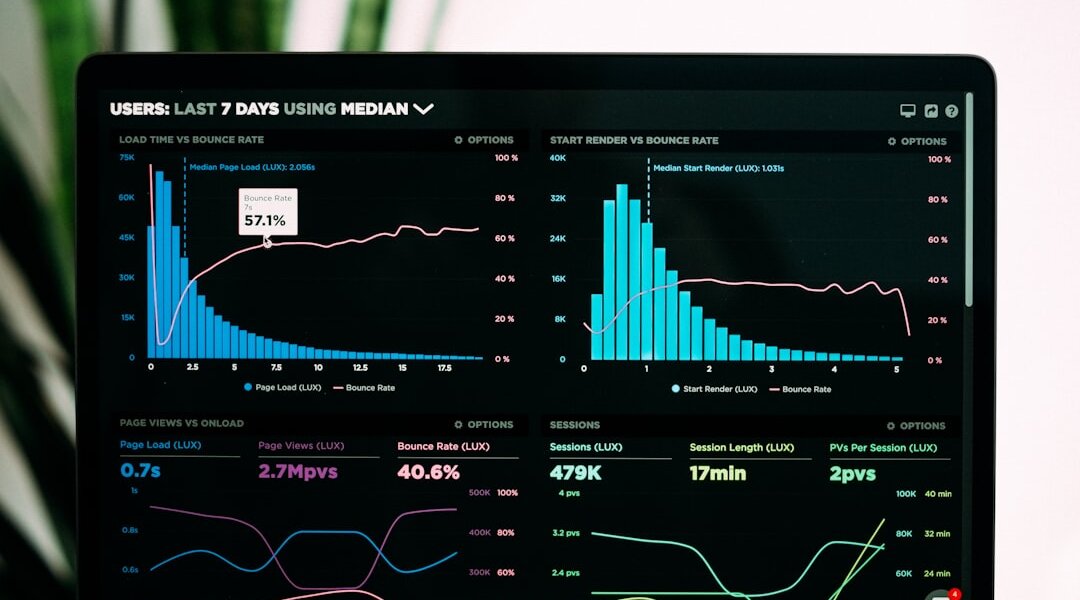
Photo by Luke Chesser on Unsplash
As the dust settles on Q1 2026 earnings, the technology landscape is buzzing with anticipation for the second half of the year. While early 2026 saw various market shifts, a clear picture is emerging of which Fortune 500 tech giants are not just weathering the storm, but are strategically positioned to capture significant growth in H2. The driving forces behind this projected expansion are multifaceted, spanning the relentless march of Artificial Intelligence (AI), the ever-expanding reach of cloud computing, and the critical evolution of enterprise software solutions.
The overall tech sector continues to be a dominant force, with analysts noting that demand for AI chips, software, and data services continues to drive growth across the largest technology companies in the world. Companies are making massive capital expenditure commitments, particularly in ICT software, to build data centers and AI infrastructure. This infrastructure boom reflects a fundamental shift in how innovation happens, with estimates pointing to roughly $700 billion of AI infrastructure spending in 2026 alone.
AI & Cloud Computing: The Unstoppable Engines
It’s no secret that AI and cloud computing remain at the forefront of technological innovation and investment. The global cloud computing market is valued at nearly $918 billion in 2026 and is on track to surpass $1 trillion this year, with public cloud end-user spending alone forecast to hit $850 billion. This remarkable growth is largely fueled by AI, which is now the biggest single driver of cloud expansion. AI-related workloads constitute 19% of total cloud spending in 2026, a significant jump from 8% in 2023.
Leading the charge in this domain are the hyperscalers: Amazon Web Services (AWS), Microsoft Azure, and Google Cloud Platform (GCP). As of Q1 2026, AWS holds 30% of the global cloud infrastructure share, Azure 25%, and Google Cloud 13%. Together, these three control 68% of all enterprise cloud spending. Their ongoing, massive investments in AI research and development, coupled with expanding cloud infrastructure, solidify their positions. Amazon alone is on track to spend an estimated $100 billion on AI R&D by year-end. These companies are not just providing infrastructure; they are integrating AI capabilities deeply into their services, offering advanced AI platforms that cater to diverse business needs, including natural language processing, image recognition, and predictive analytics.
Enterprise Software & Cybersecurity: Digital Transformation’s Backbone
The enterprise software market is undergoing its own transformative period, driven heavily by AI and the persistent demand for digital transformation. The global software market is projected to grow from $926.34 billion in 2026 to $2.2 trillion by 2034, exhibiting a compound annual growth rate (CAGR) of 11.5%. This growth is propelled by an increasing shift from on-premise solutions to cloud-based platforms offering scalability and flexibility.
Companies like Microsoft, Salesforce, and Oracle are incredibly well-positioned. Microsoft, with its extensive suite of enterprise applications and its Azure cloud, continues to embed AI across its offerings, from productivity tools to business intelligence. Salesforce maintains its leadership in CRM, leveraging AI to enhance customer interactions and sales automation. Oracle, too, is expanding its cloud presence and integrating AI into its enterprise resource planning (ERP) and database solutions. The enterprise digital transformation software market itself is projected to grow from $2.88 billion in 2026 to $9.67 billion by 2034, driven by accelerated adoption of cloud and AI technologies. AI agents that handle complete workflows autonomously are a significant trend, with 23% of organizations already scaling these systems across their operations.
Cybersecurity, an indispensable component of digital transformation, also presents a robust growth area. With increasing cyber threats and stricter data privacy regulations, the demand for robust cybersecurity solutions is leading to consolidation and strategic deals. Tech giants with strong cybersecurity portfolios or those making strategic acquisitions in this space are set for continued revenue streams, as businesses prioritize safeguarding their digital assets.
Innovation & Strategic M&A: Fueling Future Frontiers
Beyond the established sectors, tech giants are also positioning themselves for H2 growth through aggressive innovation and strategic mergers and acquisitions (M&A). The M&A landscape in early 2026 shows disciplined capital deployment, with significant activity in software, IT services, applied AI solutions, and digital infrastructure. Companies are seeking to acquire advanced capabilities, reduce R&D costs, and stay competitive, particularly in AI. Technology-led dealmaking will dominate, with AI, cybersecurity, and quantum computing driving capability-focused acquisitions.
NVIDIA, for instance, has become a colossal force, dominating the market for AI chips and graphics processing units (GPUs) essential for AI systems. Its technologies power data centers, cloud computing platforms, and AI development worldwide, making it a critical supplier in the AI ecosystem. The company’s investment in R&D and strategic partnerships ensures its continued relevance and growth as AI continues to expand. Other players like Apple are focusing on expanding their services revenue and exploring new product categories, potentially leveraging AI and augmented reality to create new consumer experiences. Even Meta Platforms is making long-term bets on the metaverse and AI, with significant R&D investments aimed at future growth.
The pursuit of AI capabilities and the infrastructure needed to support them define a new phase for tech M&A. Strategic buyers are racing to secure control over models, data, and infrastructure, with AI-based solutions commanding premium valuations.
Conclusion: Harnessing the Momentum
The post-Q1 2026 landscape underscores a clear trend: tech giants deeply embedded in AI, cloud computing, and robust enterprise solutions, complemented by strategic innovation and M&A, are best prepared for significant growth in the latter half of the year. Companies like Microsoft, Amazon, Google, NVIDIA, and Salesforce demonstrate strong positioning due to their foundational technologies and continuous investment in future-proof areas. Their ability to scale AI-driven services, expand cloud infrastructure, and provide essential enterprise tools will be key differentiators. The market is rewarding those who are not just adapting to the AI era but are actively shaping it.
Which tech giants do you believe are best poised for H2 2026 growth? Share your insights and predictions in the comments below!