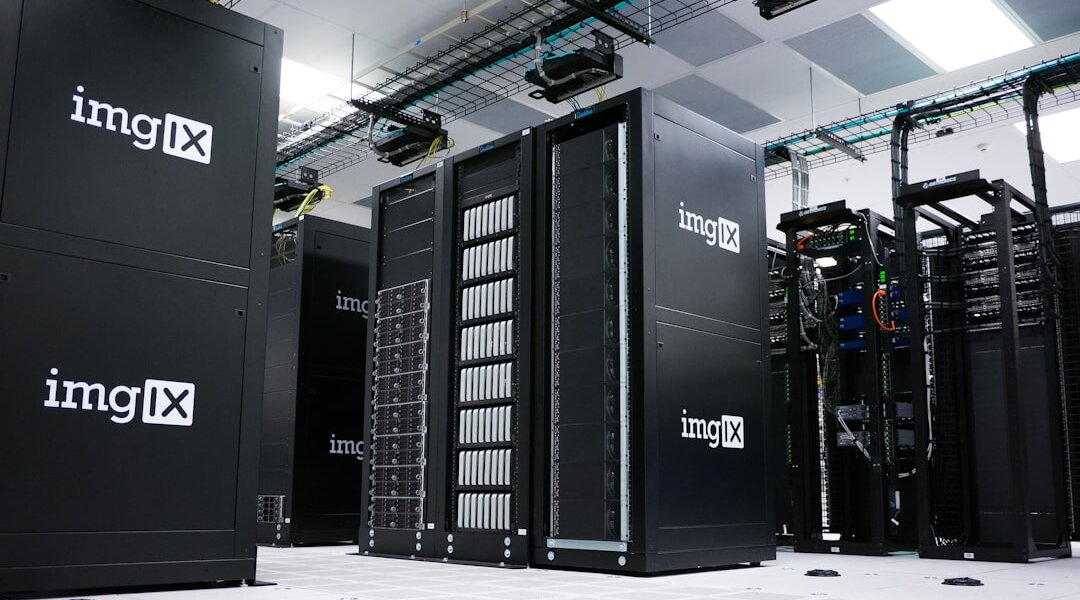
For years, Nvidia has been the undisputed monarch of the AI chip landscape, with its GPUs powering the rapid advancements in artificial intelligence. Its CUDA software ecosystem has created a powerful moat, making Nvidia chips the go-to for training large language models (LLMs) and other complex AI workloads. However, the tides are turning. Competitors AMD and Intel are aggressively pushing their own AI accelerators, challenging Nvidia’s dominance and creating a dynamic, competitive environment that is shaking up the semiconductor stock market.
AMD’s Ascent: Team Red’s AI Ambitions and MI300 Series
AMD, traditionally a strong competitor in CPUs and gaming GPUs, has made significant strides in the AI accelerator market with its Instinct MI300 series. The MI300X, in particular, is designed for AI workloads and has seen adoption from major cloud players like Microsoft and Oracle. AMD claims that the MI300X offers a compelling performance alternative to Nvidia’s H100, especially in AI inference. The company has been actively expanding its production capacity and expects its AI chip sales to reach between $3.5 billion and $4 billion by the end of 2024.
AMD’s strategy is multi-pronged, focusing on technological innovation, an open software ecosystem (ROCm), and strategic partnerships. While ROCm still faces challenges in matching the breadth and developer adoption of Nvidia’s CUDA, AMD is making significant improvements, including a reported 2.7x inferencing performance increase for MI300X since its launch. The company also offers the MI300A, a CPU/GPU combination targeted at High-Performance Computing (HPC), adopted by supercomputers like El Capitan.
Investor sentiment around AMD’s AI prospects has been largely positive, with the stock seeing significant rallies driven by strong demand for its AI infrastructure. Analysts anticipate continued strong growth, with projections of 80% revenue growth in its data center business by 2027. However, some analysts caution that the initial surge in GPU demand might ease, and AMD’s valuation, at around 47x consensus 2024 earnings, is considered relatively high. The company’s future MI350 and MI450 accelerators are expected to further expand its addressable market.
Intel’s Gaudi Gaze: A New Era for Chipzilla in AI
Intel, a long-standing giant in the semiconductor industry, is also aggressively pursuing the AI chip market, particularly with its Gaudi accelerators. After years of struggling to gain a foothold, Intel’s AI chip strategy is now focusing on inference and agentic AI workloads, leveraging both GPUs and other processors. The Gaudi 2 and the newer Gaudi 3 are central to this push, with Intel highlighting their cost-effectiveness and scalability. Intel claims Gaudi 3 offers 50% better inference capabilities and 40% improved power efficiency over Nvidia’s H100 in certain benchmarks, and at a fraction of the cost.
Despite promising performance claims and strategic partnerships with companies like IBM Cloud, Intel has faced challenges in Gaudi 3 adoption, partly due to software ease-of-use issues. This led Intel to revise its 2024 Gaudi revenue target from $500 million, acknowledging a slower-than-anticipated uptake. However, Intel is determined to become a key player in the US AI strategy, investing heavily in AI chips, manufacturing, and foundry services. The company reported a 7% year-over-year increase in Q1 2026 revenue, driven primarily by surging demand for AI infrastructure, with its Data Center and AI (DCAI) group seeing $5.1 billion in revenue.
Intel’s stock performance has lagged behind its peers, with a 39.8% loss over the past year compared to the industry’s 110.3% growth. Negative investor perception has been fueled by declining earnings estimates and increased competition. Nonetheless, Intel’s long-term strategy involves offering integrated systems and custom silicon solutions, emphasizing power efficiency and architectural flexibility for inference and edge deployments.
Nvidia’s Counter-Punch: H200, Blackwell, and Sustaining the Lead
While AMD and Intel are making significant inroads, Nvidia is far from resting on its laurels. The company continues to innovate at a rapid pace, maintaining a commanding lead in the AI chip market, with some estimates placing its market share at over 80%. Nvidia’s strategy involves a relentless product roadmap, with annual updates to its GPU architecture.
The H200, an enhanced version of the highly successful H100, is designed to handle large language model inference and mid-tier training. Notably, the US government has cleared approximately 10 Chinese firms to purchase the H200, addressing previous export control concerns and potentially unlocking billions in revenue for Nvidia in 2026.
Looking ahead, Nvidia’s Blackwell architecture, introduced in 2024, is a significant leap forward, featuring a two-die chiplet design with 208 billion transistors and an expected 25x energy efficiency gain per AI operation compared to Hopper. Blackwell is projected to account for over 80% of Nvidia’s high-end GPU shipments in 2025. Further down the roadmap, the Rubin platform, comprising six new chips including the Vera CPU and Rubin GPU, is slated for 2026, aiming for a 10x reduction in inference token cost and 4x reduction in GPUs for training Mixture-of-Experts (MoE) models compared to Blackwell.
Nvidia’s stock has continued its impressive run, recently eclipsing the $5 trillion market capitalization milestone. This is fueled by a “dual-track” strategy of leveraging H200 inventory while ramping up Blackwell production, ensuring the company captures global compute demand. Despite intense competition, Nvidia’s integrated hardware-software ecosystem (CUDA) and continuous innovation solidify its position.
The Stock Market Showdown: Decoding Investor Sentiment
The AI chip market’s intense competition directly impacts the stock movements of these semiconductor giants. Nvidia’s stock continues to show robust growth, driven by its technological leadership and strategic moves to address market demand and geopolitical challenges. Analysts maintain a “Strong Buy” consensus for Nvidia, with significant upside potential.
AMD, while still trailing Nvidia in overall market share, is gaining traction. Its aggressive product roadmap and increasing adoption of its MI300 series by hyperscalers have positioned it as a credible challenger, offering a “higher-risk, higher-reward” opportunity for investors. The company’s stock performance reflects investor optimism about its AI growth trajectory.
Intel faces a steeper uphill battle, reflected in its comparatively weaker stock performance. While its Gaudi series and focus on cost-effective inference solutions offer potential, the company needs to demonstrate consistent execution and overcome software integration hurdles to win significant market share. However, Intel’s strategic shift towards foundry services and custom silicon could provide long-term growth.
The overall AI chip market is projected to reach at least $1 trillion by 2027, creating immense opportunities for all three players. The “silent war” between Nvidia, AMD, and Intel will continue to shape the future of AI and generate significant investor interest.
Conclusion: A Dynamic Future for AI Silicon
Nvidia’s dominance in the AI chip market, while still formidable, is indeed facing credible challenges from both AMD and Intel. AMD’s MI300 series and strategic partnerships are making it a strong alternative, particularly in inference workloads. Intel, with its Gaudi accelerators and renewed focus on inference and custom silicon, is carving out its niche. The continuous innovation from all three companies, coupled with the insatiable demand for AI computing, ensures a vibrant and competitive landscape. Investors and tech enthusiasts alike should closely watch these developments, as the race for AI silicon supremacy is far from over.
What are your thoughts on the evolving AI chip battle? Share your predictions for Nvidia, AMD, and Intel in the comments below!