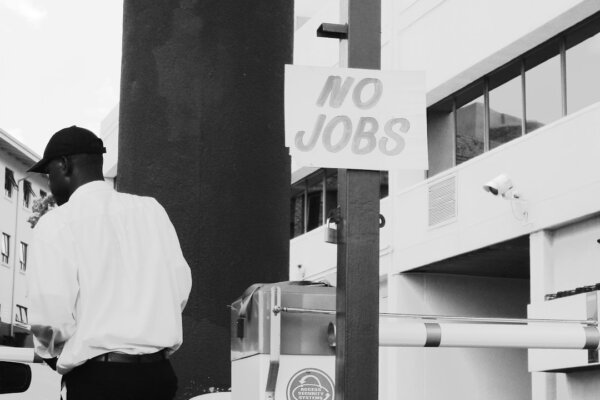
Photo by Igor Omilaev on Unsplash
Silicon Valley, the global epicenter of technological innovation, is once again experiencing a turbulent period as major players continue to announce significant workforce reductions. The latest to make headlines is Microsoft, which has initiated a new wave of layoffs, with thousands of employees affected. These cuts are notably concentrated within its highly strategic Azure cloud computing division, sparking concerns about a broader restructuring driven by the company’s aggressive push into artificial intelligence (AI) and shifting market dynamics.
The news sends a fresh ripple of anxiety through the tech landscape, which has seen unprecedented volatility in employment over the past few years. As companies like Microsoft realign their strategies, the implications for the future of cloud computing, AI development, and the tech workforce are profound.
The Unrelenting Tide of Tech Layoffs
The current wave of job cuts at Microsoft is not an isolated incident but rather a continuation of a troubling trend that has gripped the tech industry since late 2022. Following a period of hyper-growth and aggressive hiring during the COVID-19 pandemic, many Silicon Valley giants have been recalibrating their workforces. Economic uncertainties, rising interest rates, and a renewed focus on profitability have driven many companies to streamline operations.
Throughout 2023, and continuing into 2024 and 2025, the tech sector witnessed a relentless series of layoffs, impacting hundreds of thousands of workers across various companies. This phenomenon, often described as an “economic hangover” from excessive pandemic-era hiring, has fundamentally reshaped the tech employment landscape. While some companies initially attributed these cuts to market corrections, the narrative has increasingly shifted to strategic realignment, with AI frequently cited as a primary catalyst for organizational change.
Microsoft’s Strategic Chessboard: Azure, AI, and Realignments
Microsoft, a powerhouse in enterprise software and cloud services, has been an active participant in this ongoing workforce adjustment. The company’s recent layoffs have notably impacted its critical Azure cloud computing division, as well as areas like mixed reality. For instance, in June 2024, reports indicated significant reductions in teams such as Azure for Operators and Mission Engineering, with some insiders suggesting as many as 1,500 redundancies in Azure for Operators alone.
More recently, in June 2026, Microsoft also announced cuts of hundreds of employees in its Azure cloud research and development division in China. These specific layoffs were largely attributed to escalating geopolitical tensions between the United States and China, which have complicated the operation of unified cloud networks and limited the deployment of advanced AI hardware in the region. A Microsoft spokesperson consistently frames these actions as “organizational and workforce adjustments” necessary for effective business management and a commitment to “prioritize strategic growth areas,” particularly AI.
The company is making a clear strategic pivot, reallocating substantial capital expenditure towards AI infrastructure, data centers, and global cloud capacity. This involves a critical evaluation of every dollar and every engineering headcount against its overarching AI roadmap, leading to leaner operations in areas deemed less aligned with these core AI ambitions.
The AI Paradox: Driving Growth, Reshaping Workforce
The paradox at the heart of these layoffs is that AI, while driving significant growth in cloud platforms like Azure, is simultaneously acting as a catalyst for workforce restructuring. Microsoft’s Azure platform continues to experience robust growth, fueled by the company’s substantial AI investments and its partnership with OpenAI.
However, the soaring costs of scaling AI infrastructure are putting pressure on Microsoft’s financial performance, leading to a need for operational efficiency. This means that while AI creates new roles and opportunities, it also automates existing tasks and increases the productivity of individual developers and teams, potentially reducing the need for certain positions. Roles in cloud infrastructure, support services, and even some corporate functions are being systematically re-evaluated or replaced by AI systems and automation.
Some critics suggest that “AI-washing” is occurring, where companies use the perceived future potential of AI to justify workforce reductions even before the technology has fully replaced human labor. This strategic realignment demands that professionals in the tech industry continuously adapt their skill sets, focusing on areas where human creativity, complex problem-solving, and AI expertise intersect.
Conclusion
Microsoft’s latest wave of layoffs, particularly within its Azure cloud division, underscores the profound and ongoing transformation sweeping through Silicon Valley. These are not merely cost-cutting measures but strategic realignments driven by an aggressive embrace of AI and the complex interplay of economic, technological, and geopolitical factors. While the immediate impact on affected employees is undoubtedly challenging, these shifts signal a future where technological innovation, especially in AI, will continue to redefine the landscape of work.
For tech professionals, the message is clear: continuous learning and adaptation are paramount. Understanding the evolving demands of the AI era and developing specialized skills will be crucial for navigating this dynamic job market. For companies, the challenge lies in balancing innovation with responsible workforce management, ensuring that the pursuit of technological advancement also fosters a sustainable and equitable future for its human capital.
What are your thoughts on this latest wave of layoffs and the role of AI in shaping the future of tech employment? Share your insights in the comments below.