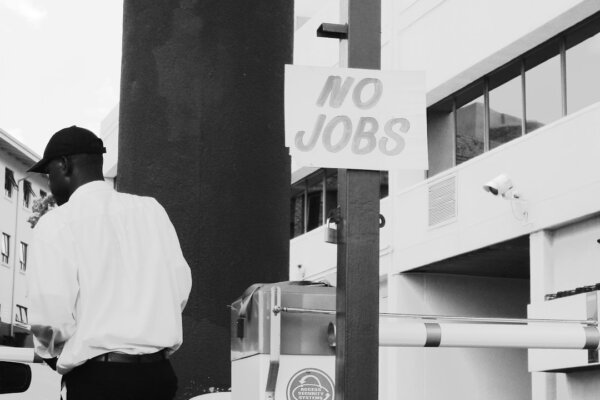
Photo by Austin Curtis on Unsplash
In a startling turn of events, the global economy has been shaken by a rapid succession of layoff announcements, creating what feels like a 24-hour economic quake. Thousands of employees across the technology sector, manufacturing industries, and service providers have received news of job cuts, signaling a significant recalibration of the workforce. This widespread phenomenon, while seemingly sudden, is the culmination of various economic pressures, technological advancements, and strategic business realignments.
The Tech Tremor: Giants Under Pressure
The technology sector, often seen as an engine of growth, is at the epicenter of these workforce reductions. As of May 23, 2026, over 113,863 workers have been impacted by 179 layoff events this year, averaging approximately 796 job losses per day. Tech layoffs alone have surged past 100,000 in 2026, with major players like Oracle, Meta, Intuit, PayPal, Cisco, and Amazon announcing significant reductions. For instance, Oracle reportedly impacted 30,000 employees, while Meta announced plans to cut around 8,000 jobs in May.
Several factors are contributing to this tremor in Silicon Valley and beyond. A primary driver is the accelerating adoption of Artificial Intelligence (AI). Companies are aggressively restructuring to become “AI-first,” pouring billions into AI infrastructure and development. This shift often means that tasks previously performed by human workers, particularly in entry-level and mid-level roles, are being automated or made redundant by AI tools. Cloudflare, for example, explicitly cited a 600% increase in AI tool usage when announcing 1,100 layoffs, demonstrating a direct correlation between AI integration and workforce reduction.
Beyond AI, the sector is also correcting for overhiring during the pandemic boom, when demand for digital services soared. Now, amidst rising interest rates and a more cautious investment climate, companies are prioritizing efficiency and streamlining operations. Some experts even suggest a phenomenon of “AI washing,” where companies might exaggerate AI’s role to justify cuts driven by other cost-cutting or restructuring motives.
Ripple Effects Beyond Silicon Valley: Manufacturing and Services Feel the Squeeze
The economic quake isn’t confined to tech campuses; its aftershocks are reverberating through traditional industries as well. Manufacturing, a cornerstone of many economies, is experiencing significant job cuts. Companies in automotive parts, chemicals, and food production are announcing layoffs due to softening industrial demand, supply chain restructuring, and efforts to modernize operations through automation. For instance, Dow plans to cut approximately 4,500 jobs as it shifts towards AI and automation. Similarly, automotive-related manufacturing saw almost 600 jobs cut in May, with companies like Adient and Yanfeng reducing staff.
The service industry is also feeling the pinch. Logistics, customer service, finance, and even healthcare sectors are seeing workforce reductions. Major logistics providers like UPS have announced plans to eliminate 30,000 jobs in 2026 through attrition. Financial giants such as Citi are continuing job cuts, aiming to reduce their workforce by 10% over time. These reductions are often attributed to broader macroeconomic pressures, including economic uncertainty, decreased consumer spending, and the ongoing drive for operational efficiency. The combination of these factors paints a picture of a labor market undergoing a profound and rapid transformation.
Navigating the Aftershocks: Strategies for Resilience
In this turbulent environment, both companies and individuals are seeking strategies to navigate the aftershocks. For businesses, the focus is on strategic realignment, often involving substantial investments in AI and automation, while simultaneously optimizing existing operations. This means re-evaluating business models, consolidating functions, and prioritizing areas of high growth and efficiency. Companies are looking to operate with leaner, more focused teams, leveraging technology to achieve greater output with fewer human resources.
For the workforce, this period demands adaptability and a proactive approach to skill development. The skills gap is widening, with a strong emphasis on AI literacy, data science, cybersecurity, and other emerging technologies. Upskilling and reskilling are no longer optional but essential for remaining competitive in a rapidly evolving job market. Junior software engineers, for example, are facing significantly more pressure, while older workers in AI-exposed categories are seeing employment rise, highlighting a shift in demand for experience and specialized skills. Industry experts predict a “low-hire, more-fire” dynamic for 2026, underscoring the need for individuals to continuously learn and diversify their professional capabilities.
Conclusion: A New Era of Work
The recent surge in layoffs across tech, manufacturing, and service sectors marks a pivotal moment in the global economy. It’s a clear indication that we are entering a new era of work, fundamentally reshaped by technological innovation, particularly AI, and persistent economic uncertainties. While the immediate impact is undoubtedly challenging for many, this transformation also presents an opportunity for significant advancements in productivity and efficiency. The average daily job losses of nearly 800 people in 2026 underscore the scale of this shift.
The future workforce will demand greater agility, continuous learning, and a willingness to embrace new technologies. As companies continue to restructure and redefine roles, individuals must invest in their own adaptability and skill sets to thrive. Stay informed about industry trends, explore new learning opportunities, and consider how your skills can align with the demands of an increasingly automated and AI-driven world. The economic landscape is shifting; are you ready to adapt?