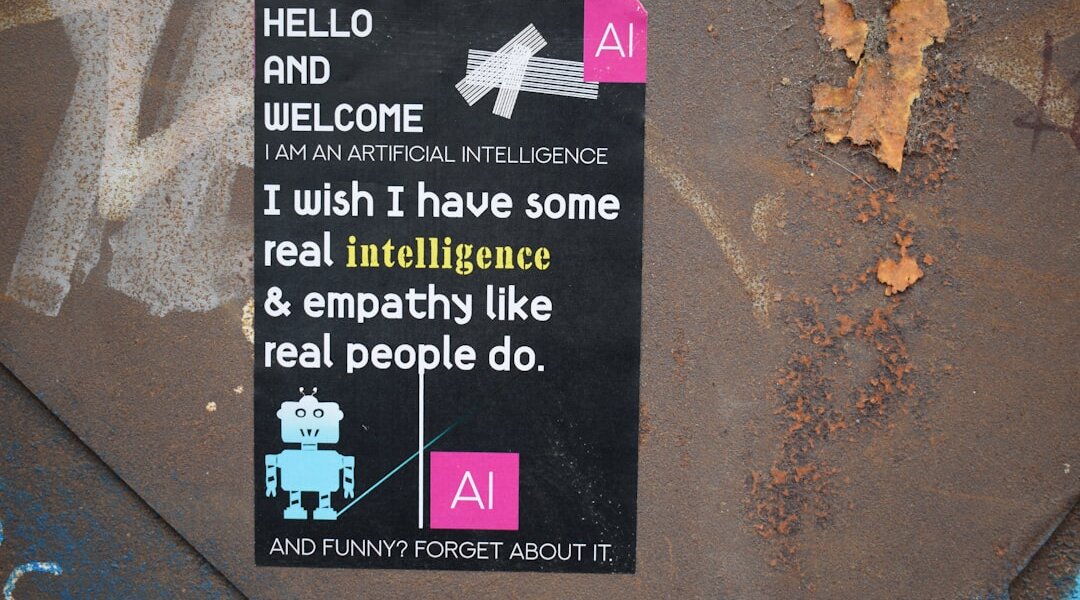
Photo by Marija Zaric on Unsplash
The tech industry is no stranger to rapid change, but the current wave of layoffs, particularly from giants like Amazon, feels different. It’s not just about economic downturns or market corrections; it’s about a fundamental restructuring driven by the relentless march of artificial intelligence. Amazon has confirmed significant job cuts, explicitly linking them to the company’s aggressive push into AI. This “tech bloodbath” has left many professionals wondering: is your job safe in the age of AI?
The AI Imperative: Why Amazon is Restructuring
Amazon has been at the forefront of this transformation, undergoing multiple rounds of corporate layoffs. The company cut approximately 14,000 corporate jobs in October 2025, following earlier reductions, bringing the total to well over 30,000 since late 2022. Further cuts of 16,000 corporate jobs were announced in February 2026. These aren’t isolated incidents but part of a strategic overhaul.
Amazon CEO Andy Jassy has been remarkably candid about the rationale behind these decisions. He explicitly stated that the deployment of AI will “reduce our total corporate workforce over the next few years as we get efficiency gains from using AI extensively across the company”. This isn’t merely about cutting costs; it’s a strategic reinvention. Amazon is pouring billions into AI infrastructure and data centers, viewing these investments as crucial to its long-term competitiveness and efficiency. The goal is to be “organized more leanly, with fewer layers and more ownership, to move as quickly as possible for our customers and business”.
Beyond Amazon: A Tech-Wide Transformation
What’s happening at Amazon is a microcosm of a broader industry trend. Companies across the tech landscape are re-evaluating their workforce needs in light of AI’s capabilities. Shopify, Duolingo, Microsoft, Expedia, Pinterest, and Dow are just a few examples of companies that have either implemented AI-driven workforce reductions or are reallocating resources to AI-focused roles.
The impact is being felt across various corporate functions. Roles in HR, project management, data analysis, operations planning, customer insights, and even AWS cloud engineering are becoming increasingly susceptible to AI automation. This marks a significant shift from the previous narrative of AI merely “augmenting” human capabilities to a more explicit strategy of potential job displacement, particularly for entry-level white-collar positions. While Amazon founder Jeff Bezos has expressed a belief that AI could lead to labor shortages, and AWS CEO Matt Garman insists AI will transform jobs rather than eliminate them, the current data points to a challenging transition for many.
Navigating the New Landscape: Future-Proofing Your Career
Despite the unsettling headlines, the consensus among experts is that AI will largely transform jobs rather than simply eliminate them entirely. This transformation, however, demands a proactive approach from professionals. New specialist roles directly related to AI are rapidly emerging, such as AI trainers, data science professionals, AI ethics experts, and prompt engineers.
The key to remaining relevant lies in embracing continuous learning and adapting your skillset. While AI excels at repetitive and data-intensive tasks, uniquely human capabilities will become even more valuable. These include creative problem-solving, critical thinking, emotional intelligence, and interpersonal skills. Professionals who can effectively collaborate with AI, leveraging its power while applying human judgment and innovation, will be indispensable.
For those in tech, specific technical skills are becoming paramount. Proficiency in programming languages like Python, Java, and C/C++, along with a strong understanding of Natural Language Processing (NLP) and Large Language Models (LLMs), are highly sought after. The ability to understand, manage, and even “prompt” AI systems effectively is quickly becoming a core workplace skill across various professions. It’s no longer enough to just do your job; you must understand how AI can do it faster, better, or augment your own capabilities.
Conclusion: Adapt or Be Left Behind
The “tech bloodbath” at Amazon and other leading companies is a stark reminder that the AI revolution is not a distant future – it’s here, and it’s reshaping the employment landscape at an unprecedented pace. While the immediate impact of layoffs is concerning, it also underscores a critical opportunity for professionals to adapt and thrive. The future of work will demand a workforce that is agile, continuously learning, and adept at leveraging AI as a powerful tool. Don’t wait for your role to be redefined; proactively invest in the skills that will make you indispensable in this evolving technological era. Start learning, experimenting, and integrating AI into your professional toolkit today.