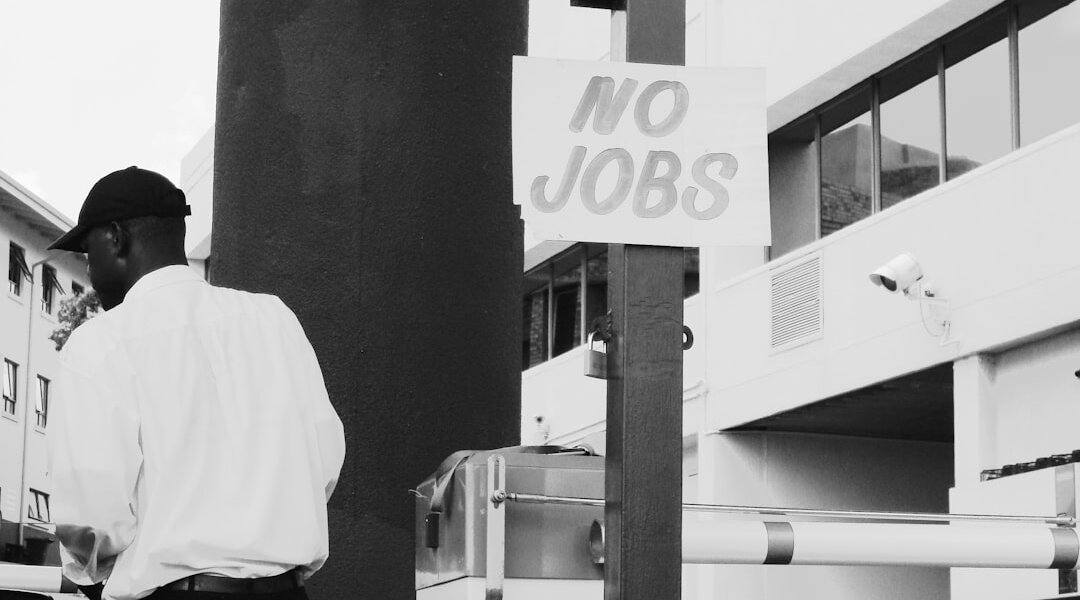
Photo by Hennie Stander on Unsplash
In a startling turn of events, the global economy has witnessed a dramatic escalation of job cuts, creating a “triple threat bloodbath” across some of its most pivotal sectors. Over recent weeks, a wave of unprecedented layoffs has swept through technology, manufacturing, and services – often with announcements hitting headlines within a remarkably short span. This simultaneous contraction signals more than just a temporary blip; it points to fundamental shifts driven by economic headwinds, technological advancements, and evolving consumer and business landscapes. Understanding the drivers behind these widespread redundancies is crucial for anticipating the future of work and economic stability.
The Tech Reckoning Continues: AI and Economic Headwinds
The tech sector, long seen as an unassailable engine of growth, continues its painful reckoning. After years of aggressive hiring spurred by pandemic-driven digital acceleration, many companies are now rightsizing their workforces. This correction is exacerbated by several factors:
- Economic Slowdown: Rising interest rates and inflationary pressures have tightened venture capital funding and reduced consumer and enterprise spending on new tech, forcing companies to prioritize profitability over hyper-growth.
- Overhiring Correction: Many firms admit to overestimating post-pandemic demand, leading to bloated workforces that are no longer sustainable in a more cautious economic climate.
- AI Integration: The rapid advancement and adoption of artificial intelligence (AI) are beginning to reshape job functions. While AI creates new roles, it also automates tasks previously performed by humans, leading to / related efficiencies and, consequently, . This is particularly evident in areas like customer support, content generation, and even some aspects of software development.
The current wave of isn’t just about economic cycles; it’s a structural shift where companies are leaner, more efficient, and increasingly leveraging and to achieve their goals.
Manufacturing’s Shifting Sands: Automation, Supply Chains, and Global Competition
The manufacturing sector, a cornerstone of many economies, is simultaneously grappling with its own set of challenges, leading to significant workforce reductions. While often viewed through the lens of blue-collar jobs, modern manufacturing encompasses a wide range of skilled positions, all of which are feeling the pressure.
- Advanced Automation: The drive for increased productivity and reduced labor costs is accelerating the adoption of and in factories. While this makes operations more efficient, it inevitably reduces the need for human intervention in repetitive tasks.
- Supply Chain Reconfiguration: Geopolitical tensions and the lessons learned from recent global disruptions are pushing companies to reshore or nearshore production. While this might create some jobs, the new facilities are often highly automated, requiring fewer workers than older plants.
- Global Economic Volatility: Fluctuations in global demand, commodity prices, and trade policies directly impact manufacturing output and employment levels. Sectors reliant on consumer discretionary spending, like automotive or white goods, are particularly vulnerable during economic downturns.
The is undergoing a profound transformation, emphasizing and over sheer labor volume.
Service Sector Under Pressure: Consumer Shifts and Digital Transformation
Even the seemingly resilient service sector, which includes everything from retail and hospitality to finance and professional services, is not immune to the current layoff spree. This sector is experiencing a confluence of pressures that are reshaping its employment landscape.
- Shifting Consumer Behavior: Post-pandemic, consumer spending patterns have evolved. While some areas like travel have rebounded, others, particularly retail, continue to face challenges from the persistent shift towards and changing discretionary spending habits.
- Digital Transformation and AI: Similar to tech, the service sector is aggressively adopting and to streamline operations. Chatbots are handling customer inquiries, automated systems are processing transactions, and AI-powered analytics are optimizing service delivery. This leads to increased but often at the cost of human roles.
- Cost-Cutting Measures: Facing economic uncertainty, many service-oriented businesses are implementing aggressive cost-cutting strategies, with staffing often being the first area to be reviewed. This affects roles from administrative support to mid-level management.
The is adapting to a new era where and are paramount, driving a need for different skill sets and often fewer overall employees.
Navigating the New Normal: Strategies for Resilience
The simultaneous job cuts across these three diverse yet interconnected sectors paint a concerning picture for the global job market. This isn’t merely a cyclical downturn; it’s an acceleration of structural changes driven by technological innovation and evolving economic paradigms. For individuals, this necessitates a proactive approach to and , focusing on competencies that complement and , such as critical thinking, creativity, complex problem-solving, and emotional intelligence. For businesses, it demands a strategic re-evaluation of workforce planning, embracing and while fostering a culture of continuous learning. Governments and educational institutions also have a vital role to play in developing robust frameworks for , ensuring that the benefits of technological progress are broadly shared, and no segment of society is left behind in this rapid transformation. The current challenges are a stark reminder that adaptability is not just an advantage, but a necessity.
The “triple threat bloodbath” is a wake-up call, urging us all to prepare for a future of work that will look significantly different from the past. Are you ready to adapt?