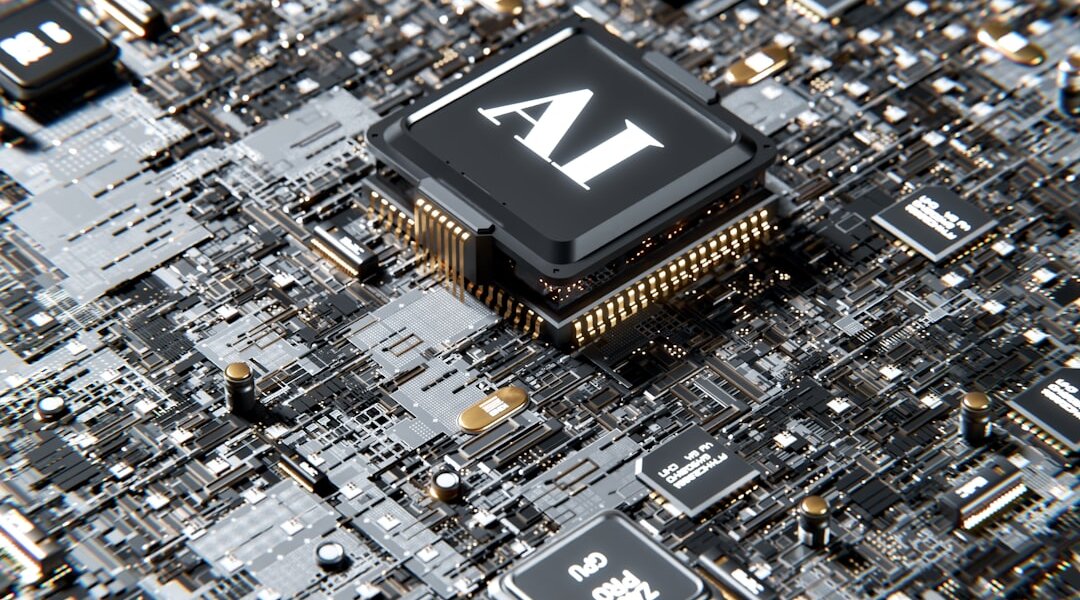
Photo by Igor Omilaev on Unsplash
The relentless march of artificial intelligence often feels unstoppable, a tide of innovation sweeping away old paradigms and forging new frontiers. Yet, even in this era of unprecedented technological advancement, the currents can be treacherous. The recent, stunning announcement from a prominent AI innovator – the decision to completely abandon its flagship hardware division – sends ripples of concern and speculation throughout the tech world. This isn’t just a minor adjustment; it’s a costly retreat from a fiercely competitive battleground, prompting a critical question: What went wrong?
The Allure and the Abyss: Why Everyone Rushed into AI Hardware
For years, the promise of custom AI silicon has been irresistible. As machine learning and deep learning models grew exponentially in complexity and appetite for computational power, the limitations of general-purpose CPUs and even GPUs became apparent. Companies envisioned a future where purpose-built AI accelerators, meticulously designed for neural network operations, would unlock unprecedented performance, energy efficiency, and competitive advantage. The dream was to own the entire AI stack, from the foundational silicon to the sophisticated software, ensuring seamless integration and optimized performance. This vision fueled a massive influx of investment into AI hardware startups and internal projects by established tech giants. The stakes were incredibly high, promising a lucrative share of the burgeoning AI market for those who could deliver.
However, the journey from concept to market-ready silicon is fraught with peril. The semiconductor industry is notorious for its exorbitant research and development costs, requiring billions of dollars and years of dedicated effort. Designing, fabricating, and validating a novel chip architecture demands a rare blend of engineering prowess, manufacturing expertise, and deep pockets. Furthermore, the rapid evolution of AI algorithms means that a chip designed today could be suboptimal for the dominant models of tomorrow, creating a moving target for hardware architects. Many entered this race with ambition, but few truly grasped the sheer scale of the challenge.
The Crushing Realities: Development Costs, Scale, and Ecosystem Challenges
The most immediate and perhaps the most significant hurdle for any aspiring AI hardware player is the astronomical cost of development. Unlike software, which can iterate rapidly, hardware development cycles are long and unforgiving. A single chip design can cost hundreds of millions of dollars, not including the immense capital expenditure required for manufacturing partnerships or even owning fabrication facilities. Even with substantial funding, achieving the economies of scale necessary to make custom silicon profitable is a monumental task. Competing with established players like NVIDIA, whose GPUs have become the de facto standard for AI training, or Google’s custom TPUs, which benefit from Google’s vast internal infrastructure, requires not just superior technology but also a robust, developer-friendly ecosystem.
This “ecosystem problem” is often underestimated. A powerful chip is only as good as the software that runs on it. Developing compilers, libraries, frameworks (like TensorFlow or PyTorch integrations), and debugging tools from scratch, or adapting existing ones, is a Herculean effort. Without a rich software ecosystem, developers are reluctant to adopt new hardware, creating a chicken-and-egg dilemma. Many promising hardware designs have faltered not because of technical deficiencies in the chip itself, but due to the absence of accessible and comprehensive software support. The cost of building this complete package, coupled with the need for continuous innovation to stay ahead of the curve, proved to be an unsustainable burden for even well-funded innovators.
Market Dynamics and the Cloud’s Shadow: A Shifting Landscape
The market for AI hardware is far from monolithic; it’s a dynamic landscape shaped by diverse needs. While high-performance training in data centers remains a critical segment, the rise of `edge AI` has introduced new requirements for low-power, compact, and cost-effective solutions. A “flagship” high-performance chip designed for the cloud might be entirely unsuited for embedded applications or smart devices. This fragmentation makes it challenging for a single hardware division to cater to all segments effectively without diluting its focus and resources.
Furthermore, the dominance of major cloud providers (AWS, Azure, Google Cloud) has profoundly impacted the independent AI hardware market. These hyperscalers offer AI-as-a-service, leveraging their own vast compute infrastructure, often powered by NVIDIA GPUs or proprietary accelerators. For many businesses, the convenience, scalability, and cost-effectiveness of consuming AI compute from the cloud outweigh the benefits of investing in and managing on-premise custom hardware. This trend effectively limits the addressable market for independent AI hardware vendors, pushing them into niche applications or forcing them to compete directly with giants that have virtually unlimited resources and a captive user base. The strategic retreat could, therefore, be seen as a realistic assessment of where the long-term value truly lies in the AI value chain.
The Strategic Pivot: When Innovation Meets Business Acumen
While the discontinuation of a flagship hardware division might appear as a failure, it can also be interpreted as a shrewd strategic pivot. In the intensely competitive AI landscape, focus is paramount. By shedding the immense financial and operational burden of hardware development, the company can reallocate resources to its core strengths – perhaps in AI software, specialized models, data services, or specific vertical applications where it holds a stronger competitive advantage. The decision to retreat from hardware is a recognition that not every company can or should attempt to be an end-to-end provider in every facet of the AI ecosystem.
This move highlights a critical lesson for the entire tech industry: innovation, while essential, must be coupled with sound business strategy. The ability to identify when a particular venture, despite its technological brilliance, is no longer viable or aligned with long-term goals is a hallmark of resilient leadership. It underscores the difficulty of maintaining leadership in both cutting-edge `AI software` and highly specialized `AI chips` simultaneously, especially against well-entrenched competitors.
Conclusion: Lessons from the AI Hardware Frontier
The costly retreat of a leading AI innovator from its flagship hardware division serves as a stark reminder of the immense challenges and complexities inherent in the `AI hardware` sector. It underscores the colossal development costs, the critical importance of a robust software ecosystem, and the shifting market dynamics shaped by cloud computing and fragmented demand. This event isn’t necessarily a sign of a slowdown in AI, but rather a realignment, pushing companies to specialize and focus on where they can truly add unique value.
For the broader AI community, this development prompts reflection: What does it mean for the future of custom silicon? Will the market consolidate further, or will new, nimbler players find niches? One thing is clear: the AI revolution continues, but its path is paved with both triumphs and strategic withdrawals. Companies must continuously evaluate their position, innovate wisely, and be prepared to adapt to an ever-evolving technological landscape. What are your thoughts on this significant strategic shift? Share your perspectives in the comments below!