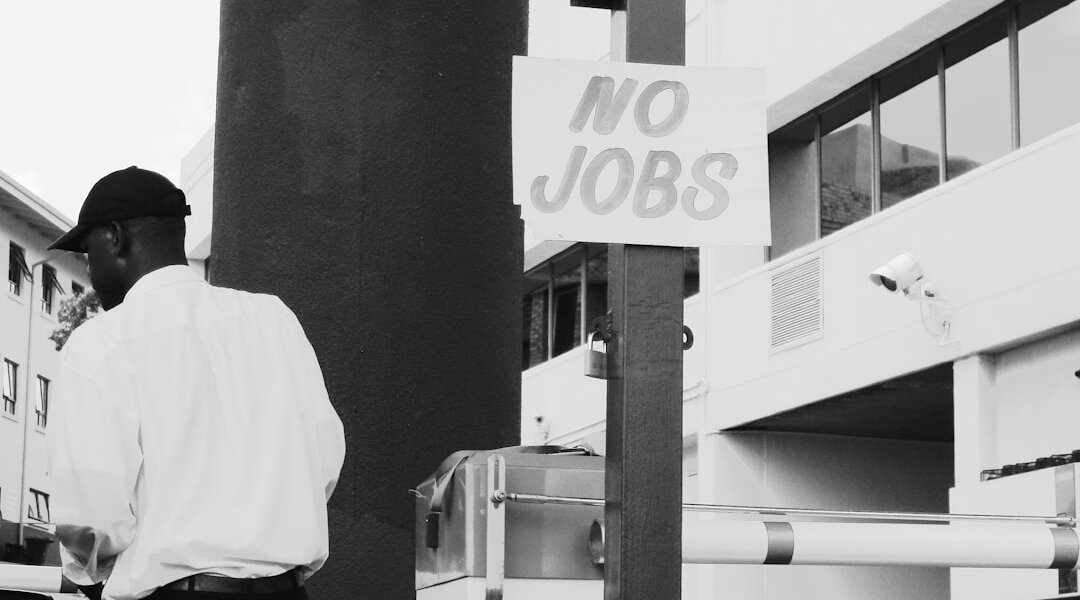
Photo by Hennie Stander on Unsplash
The 24-Hour Job Apocalypse: Tech, Manufacturing, and Services Brace for Unprecedented Layoffs
The global economy, still reeling from a series of seismic shifts, is now confronting a new, unsettling reality: a rapid and widespread wave of job losses across its most vital sectors. What some are calling the “24-Hour Job Apocalypse” isn’t a single event, but a relentless cascade of layoff announcements that are sending shockwaves through the tech, manufacturing, and services industries. Economic fears, fueled by inflation, rising interest rates, and geopolitical uncertainties, are mounting, forcing companies to make difficult decisions at an unprecedented pace. This isn’t just a cyclical downturn; it feels different, more pervasive, and potentially transformative for the very nature of work itself.
The Tech Reckoning: From Boom to Bust
For years, the technology sector was seen as an unstoppable engine of growth, a seemingly endless source of high-paying jobs and innovation. Companies expanded rapidly, often over-hiring in a race for talent and market dominance. However, the tide has turned dramatically. Major tech giants, once synonymous with limitless expansion, are now announcing significant workforce reductions with alarming regularity. From software development to digital marketing, roles are being eliminated as companies re-evaluate their operational costs and future growth projections. The reasons are multifaceted: the post-pandemic slowdown in digital adoption, a tightening of venture capital funding, and crucially, the rapid advancement of artificial intelligence (AI). Many believe that AI isn’t just a tool for efficiency but a disruptor capable of automating tasks previously performed by human workers, leading to a fundamental re-evaluation of staffing needs. Companies are prioritizing profitability and leaner operations, making the tech job market intensely competitive for those remaining.
Manufacturing’s Automation March and Shifting Sands
The manufacturing sector has long grappled with automation, but the current economic climate is accelerating its impact. Factories are increasingly investing in robotics and advanced machinery to boost efficiency and reduce labor costs, a trend that intensifies during economic uncertainty. This isn’t solely about replacing human hands; it’s about creating more resilient, less labor-dependent supply chains that can withstand future disruptions. Beyond automation, manufacturing jobs are also being impacted by shifting global supply chains. Companies are reshoring or nearshoring production, sometimes leading to new jobs, but often with a greater emphasis on highly skilled roles in automation management and data analysis, leaving lower-skilled positions vulnerable. The overall demand for goods might also be softening as consumer spending tightens, further reducing the need for production line workers. The industry is undergoing a profound transformation, demanding new skill sets and adaptability from its workforce.
Services Under Siege: The Ripple Effect of Economic Anxiety
The service sector, encompassing everything from retail and hospitality to finance and professional services, is often the first to feel the pinch of reduced consumer spending and business investment. As economic fears mount, individuals and businesses alike become more cautious, cutting back on discretionary spending and delaying investments. This directly impacts businesses reliant on consumer traffic and corporate contracts. Retailers are seeing slower sales, leading to store closures and staff reductions. The hospitality industry, which experienced a post-pandemic rebound, is now facing renewed headwinds as travel and leisure budgets shrink. Even seemingly stable sectors like finance are not immune, with banks and investment firms streamlining operations in anticipation of a tougher economic outlook. The sheer breadth of the service sector means these layoffs touch a vast number of people, creating a ripple effect that further dampens economic activity. The focus here is on cost-cutting and optimizing customer experience with fewer human resources, often through digital self-service options.
Navigating the New Normal: Adaptability and Resilience
The current wave of layoffs is more than just a temporary blip; it reflects deeper structural changes driven by technological advancements and evolving economic paradigms. While the speed and scale are alarming, it also presents an opportunity for individuals and organizations to adapt. The emphasis is shifting towards resilience and continuous learning. For workers, this means embracing reskilling and upskilling in areas like AI literacy, data analytics, cybersecurity, and advanced manufacturing techniques. For businesses, it necessitates a strategic re-evaluation of operational models, investing in technologies that augment human capabilities rather than simply replacing them, and fostering a culture of innovation. The future of work will undoubtedly be different, demanding greater agility and a proactive approach to career development. We are not just witnessing layoffs; we are observing a recalibration of the global workforce.
Conclusion: A Call to Action for the Future of Work
The “24-Hour Job Apocalypse” highlights a critical juncture for our economies and societies. The rapid pace of layoffs in tech, manufacturing, and services underscores the urgent need for a collective response. Individuals must prioritize continuous learning and skill development to remain relevant in an evolving job market. Governments and educational institutions must collaborate to create accessible and effective reskilling programs that bridge the gap between displaced workers and emerging job opportunities. Companies, in turn, have a responsibility to invest in their remaining workforce, foster innovation, and explore ethical applications of automation and AI. The challenge is immense, but by embracing adaptability and foresight, we can navigate this period of unprecedented change and build a more resilient, inclusive future of work. What steps will you take today to prepare for tomorrow’s job market?