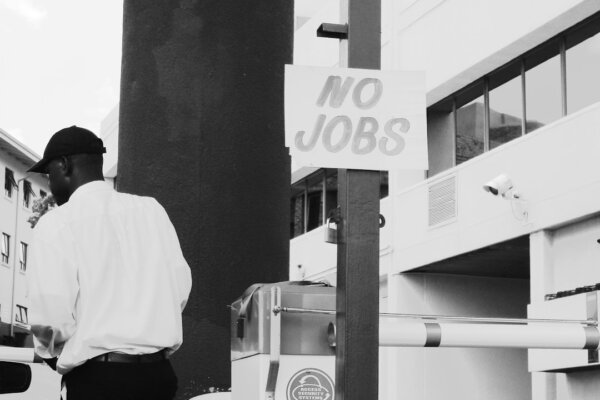
Photo by Poddar Group of Institutions on Unsplash
The Ax Falls Again: AWS Faces Unexpected Layoffs Amidst Amazon’s AI Investment Surge
In a move that has sent ripples through the technology industry, Amazon Web Services (AWS), the undisputed leader in cloud computing, has undergone significant layoffs. This news arrives amidst Amazon’s unprecedented and aggressive financial commitments to artificial intelligence (AI), presenting a complex and seemingly contradictory narrative. While the e-commerce giant pours billions into shaping an AI-powered future, its highly profitable cloud division is simultaneously shedding jobs, forcing a closer look at the evolving dynamics of the tech workforce and Amazon’s strategic recalibration.
The Unsettling Ax at AWS: A Strategic Reorientation
The recent job cuts at AWS are part of a broader trend within Amazon, which has seen the company eliminate over 16,000 positions in 2026, making it the largest contributor to tech layoffs this year. These reductions have not spared AWS, with various departments experiencing significant impacts. Roles in professional services, sales, marketing, solutions architecture, and even some AI-focused teams have been affected.
Hundreds of managers, software development engineers, product and project managers, and various other engineering roles were among those terminated. AWS executives, including Vice President of AWS Infrastructure Prasad Kalyanaraman and Senior Vice President of Applied AI Solutions Colleen Aubrey, conveyed in an internal memo that these decisions are “part of our ongoing effort to position the organization for the future while staying nimble and focused on delivering for our customers.” This indicates a strategic restructuring aimed at streamlining operations and fostering a leaner, more agile enterprise. Amazon CEO Andy Jassy has consistently emphasized the need to reduce bureaucratic overhead and operate “like the world’s largest startup.”
The AI Imperative: Billions Poured into the Future
Paradoxically, these layoffs occur as Amazon intensifies its investment in artificial intelligence. The company plans to spend a staggering $200 billion on AI capital expenditures in 2026 alone. This massive outlay is directed towards expanding its cloud and AI infrastructure, including building advanced data centers, developing sophisticated machine learning models, and creating AI-powered products.
Amazon’s commitment extends to developing its own custom AI chips, such as Graviton5 and Trainium 2, aimed at reducing reliance on external vendors and enhancing performance and efficiency for AI workloads. AWS continues to be a crucial player in the AI landscape, hosting platforms like Bedrock, which allows companies to access multiple AI models, and serving as the foundational infrastructure for many leading generative AI companies. Furthermore, Amazon is investing up to $50 billion to expand AI and supercomputing capabilities specifically for U.S. government agencies, with new infrastructure set to break ground in 2026. Andy Jassy has articulated that AI will “reinvent every customer experience” and Amazon’s ambition is to power this transformation across the entire technological stack.
Reimagining the Workforce: Efficiency vs. Displacement
The juxtaposition of significant layoffs and immense AI investment begs the question: is AI directly causing job displacement? While Amazon has stated that the layoffs are part of a broader restructuring, internal communications and CEO Jassy’s own remarks suggest a strong connection. Jassy himself anticipated that generative AI would “reduce” Amazon’s corporate workforce in the coming years due to “efficiency gains.”
This suggests that AI-driven automation may be making certain roles redundant, particularly in functions like support and marketing, where AI-powered tools can enhance efficiency. The company is not merely cutting costs but actively reallocating resources, shifting focus and funding from existing corporate roles to fuel its burgeoning AI development. This creates a dynamic where, even as some teams face cuts, others are actively hiring, showcasing a strategic pivot rather than a sign of overall weakness. For instance, AWS’s marketing chief recently sought to recruit laid-off Meta employees, indicating that certain areas within AWS are still “understaffed” and in need of top talent.
Navigating the AI-Driven Transformation
The recent AWS layoffs, set against the backdrop of Amazon’s massive AI investments, underscore a profound industry-wide transformation. This isn’t merely about cost-cutting; it’s a strategic repositioning for a future where AI is central to every customer experience and operational efficiency. While painful for affected employees, these changes reflect Amazon’s confidence in its AI-powered automation capabilities and its long-term vision for cloud dominance.
For businesses and professionals alike, Amazon’s actions serve as a powerful reminder: adaptability and continuous learning, especially in AI and related high-growth areas, are no longer optional but essential for navigating the evolving tech landscape. As AI continues to reshape industries, understanding its impact on workforce dynamics and strategic resource allocation will be paramount for sustained success.
What are your thoughts on Amazon’s strategic pivot? Share your insights and join the conversation on how AI is reshaping the future of work!