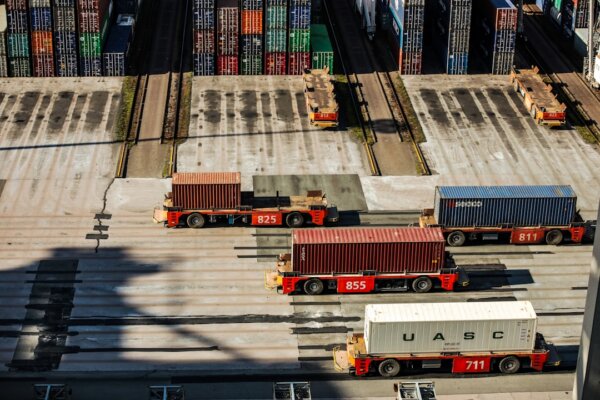
Photo by Markus Spiske on Unsplash
Imagine waking up to a world irrevocably altered. A swift, unforeseen economic shockwave rips through the global economy, leaving an unprecedented trail of job losses across the pillars of modern industry: technology, manufacturing, and services. While this scenario might sound like a dystopian novel, the underlying forces — rapid technological advancement, shifting global economic landscapes, and evolving workforce demands — are very real. What would such an “overnight carnage” entail, and more importantly, how can industries and individuals prepare for a future where adaptability is paramount?
The Perfect Storm: Unpacking the Triggers of Mass Layoffs
An event of this magnitude wouldn’t likely stem from a single cause but rather a confluence of compounding factors. Picture a scenario where several global economic indicators simultaneously flash red: supply chain disruptions reaching critical mass, sudden geopolitical shifts impacting trade, and perhaps, a dramatic acceleration in automation and artificial intelligence adoption reaching a tipping point. Businesses, facing unprecedented uncertainty and pressure on profit margins, would be forced to make swift, drastic decisions. This isn’t just about streamlining; it’s about survival. The immediate impact would be felt across the entire , as companies scramble to reduce operational costs and re-evaluate their human capital needs in light of new realities. The ripple effect would extend far beyond those directly affected, creating a climate of economic anxiety and forcing a re-evaluation of long-held assumptions about job security and career paths.
Sector-Specific Shocks: Tech, Manufacturing, and Services Under Siege
While the impact would be widespread, each sector would experience its unique form of upheaval:
-
Technology Sector: The AI Acceleration and Market Correction
For years, the technology sector has been a beacon of job creation. However, an “overnight carnage” could see this reverse dramatically. Over-hiring during boom periods, coupled with a sudden surge in advanced AI capabilities, could lead to a massive correction. Tasks previously requiring human input, from coding and data analysis to customer support and content generation, could be rapidly absorbed by AI. Companies might find themselves with redundant roles, leading to swift . The focus would shift from sheer growth to efficient innovation with leaner teams, prioritizing roles that manage and develop AI systems rather than those displaced by them.
-
Manufacturing: Hyper-Automation and Reshoring Dynamics
The manufacturing industry has long grappled with . An “overnight carnage” scenario would likely accelerate this trend to an extreme degree. Advanced robotics, 3D printing, and fully automated production lines could suddenly become the norm, driven by cost pressures and a desire for greater supply chain resilience (reshoring). This would decimate traditional factory , leading to a massive demand for highly skilled technicians capable of building, maintaining, and programming these sophisticated systems. The remaining human workforce would need significant reskilling to adapt to supervisory and specialized roles.
-
Services: Digital Transformation and Gig Economy Shifts
The services sector, from retail and hospitality to finance and administration, would also face immense pressure. Digital transformation, already underway, would accelerate dramatically. Self-service kiosks, AI-powered chatbots, and automated administrative systems could replace a vast array of customer-facing and back-office . The gig economy, while offering flexibility, might also see an oversaturation of workers, driving down wages and increasing competition. Only those with highly specialized skills, or those offering truly personalized human interaction, would find their roles secure. The challenge for this sector would be to redefine human value in an increasingly automated landscape, focusing on empathy, creativity, and complex problem-solving.
Navigating the Aftermath: Strategies for Resilience and a Brighter Future
While the prospect of such widespread layoffs is grim, it also forces a critical re-evaluation of our economic and educational . For businesses, the emphasis must be on agility, diversification, and investing in continuous reskilling programs for their existing . Companies that embrace innovation and integrate new technologies thoughtfully, rather than reactively, will be better positioned to weather such storms. This means focusing on human-AI collaboration rather than pure replacement, identifying new growth areas, and fostering a culture of continuous learning.
For individuals, the message is clear: lifelong learning is no longer a luxury but a necessity. Developing new skills, particularly in areas like data science, AI ethics, cybersecurity, and advanced technical maintenance, will be crucial. Cultivating “human skills” — critical thinking, creativity, emotional intelligence, and complex problem-solving — will become even more valuable as routine tasks are automated. Embracing adaptability and viewing career paths as dynamic journeys, rather than linear progressions, will be key to thriving in this evolving economy.
Conclusion: Building a Resilient Future Together
An “overnight carnage” scenario, while hypothetical, serves as a stark reminder of the volatile nature of our modern . It underscores the urgent need for proactive strategies from governments, businesses, and individuals alike. Investing in robust social safety nets, fostering educational systems that prioritize adaptability and future-proof skills, and encouraging responsible innovation are not just good ideas; they are essential for building a resilient society capable of navigating the profound transformations ahead. The future of jobs is not about resisting change, but intelligently shaping it. What steps are you taking to prepare for the evolving workforce landscape?