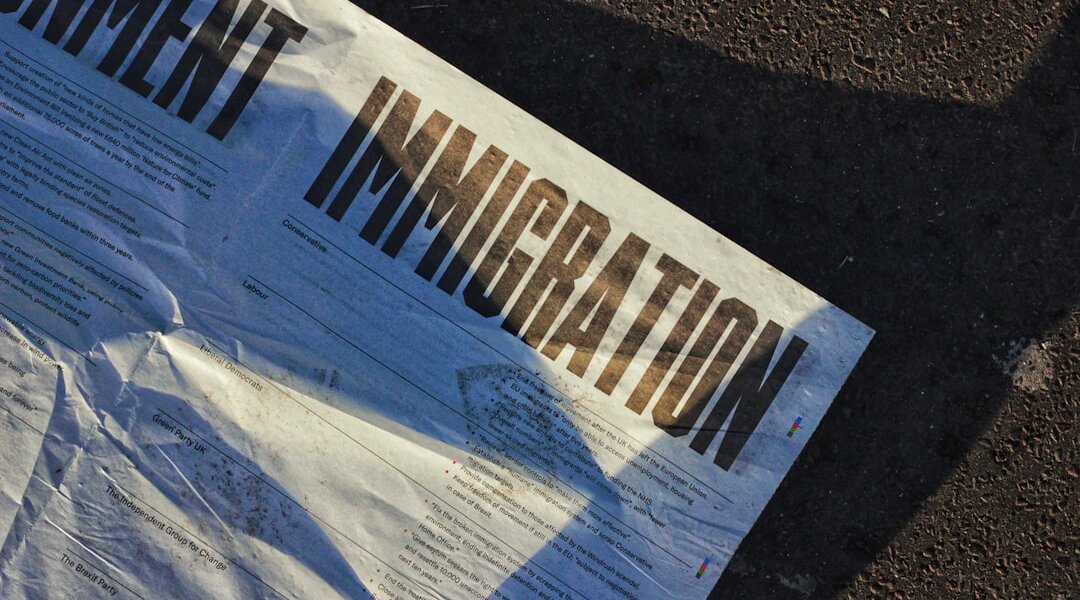
Photo by Metin Ozer on Unsplash
For countless tech professionals and skilled workers worldwide, the promise of a Green Card represents more than just a document; it’s a gateway to opportunity, innovation, and a new life in the United States. Yet, this aspiration is increasingly mired in a complex and often unpredictable landscape of policy shifts. From decades-long backlogs to recent administrative changes, understanding the nuances of U.S. immigration law has become a critical challenge, potentially extending or even ending the wait for permanent residency indefinitely.
The Backlog Beast: Understanding the Current Landscape
At the heart of the Green Card conundrum lies the formidable backlog, a bureaucratic leviathan that has left hundreds of thousands of highly skilled individuals in limbo. The primary culprit for many employment-based (EB) visa categories is the per-country limit. U.S. immigration law caps the number of employment-based green cards issued each year at approximately 140,000. Crucially, no single country can receive more than 7% of these visas annually, regardless of its population or the demand for visas from its citizens.
This “birthplace-based” system, while intended to promote diversity, disproportionately affects applicants from high-demand countries like India and China. For instance, while countries with fewer applicants might experience minimal wait times, individuals born in India or China can face delays stretching into decades, even for high-preference categories like EB-1 (Extraordinary Ability) or EB-2 (Advanced Degree Professionals). Spouses and minor children of sponsored workers also count against these caps, effectively halving the number of actual workers who can receive green cards each year.
Navigating the Shifting Sands: Recent Policy Changes and Proposals
The immigration landscape is not static; it’s a dynamic arena where legislative proposals and administrative directives can dramatically alter pathways to permanent residency. One of the most significant recent developments has been the renewed emphasis on “adjustment of status” as an “extraordinary” relief rather than a standard pathway. U.S. Citizenship and Immigration Services (USCIS) has reiterated that, generally, foreign nationals temporarily in the U.S. who wish to obtain a Green Card are expected to return to their home countries to apply through consular processing, except in “extraordinary circumstances.”
This interpretation, particularly from the Trump administration, has sparked alarm among tech leaders and immigration advocates. Critics argue that forcing applicants to leave the U.S. could lead to massive disruptions, lengthy overseas backlogs, and separate families, potentially devastating American industry by forcing top scientists, researchers, and startup founders to cease their work and leave the country. While the policy memo itself doesn’t explicitly *require* all applicants to depart, it encourages USCIS officers to exercise discretion more aggressively in denying adjustment of status applications, making the process unpredictable and potentially more arduous.
On the legislative front, there have been bipartisan efforts to address the backlog. Proposals such as the “Fairness for High-Skilled Immigrants Act” have aimed to eliminate per-country caps for employment-based green cards and raise them for family-based categories. Additionally, “green card recapture” initiatives seek to reclaim unused visas from previous years to alleviate current backlogs, a measure that could provide significant relief for the tech sector facing worker shortages.
The Tech Talent Tug-of-War: Innovation at Stake
The uncertainty surrounding Green Card policies has profound implications for the U.S. technology sector. The ability to attract and retain global talent is a cornerstone of American innovation and economic competitiveness. Many highly skilled individuals, particularly those in STEM fields, initially come to the U.S. on temporary visas like the H-1B, with the long-term goal of obtaining a Green Card.
When the path to permanent residency becomes fraught with indefinite waits or requires disruptive departures from the country, it makes the U.S. less attractive to the world’s brightest minds. Tech leaders have voiced concerns that such policies could:
- Hinder Innovation: Without a steady influx of skilled immigrants, particularly in cutting-edge fields like AI, the U.S. risks falling behind in global innovation.
- Exacerbate Talent Shortages: The U.S. faces a significant shortage of STEM workers, and foreign talent is crucial to filling these gaps. Restrictive policies could worsen this deficit.
- Drive Talent Elsewhere: If the U.S. immigration system proves too difficult to navigate, skilled professionals may choose to pursue opportunities in other countries with more welcoming and predictable immigration pathways.
The tech industry relies on a consistent, reliable pipeline of talent. Policy shifts that introduce instability or impose arbitrary barriers can directly impact companies’ ability to grow, develop new technologies, and create jobs.
Conclusion: Seeking Clarity in an Unpredictable Future
The Green Card conundrum is a multifaceted challenge, deeply impacting individuals, families, and the U.S. economy, especially the tech sector. While the desire for a fair and efficient immigration system is universal, the current policy environment is marked by uncertainty and potential disruption. The interplay of per-country limits, legislative debates, and administrative interpretations creates a complex maze for those aspiring to permanent residency.
For applicants and employers alike, staying informed about policy developments is paramount. Engage with immigration professionals, monitor official updates from USCIS and the Department of State, and consider contributing to advocacy efforts for comprehensive immigration reform. A predictable, streamlined, and merit-based immigration system is not just beneficial for immigrants; it’s essential for sustaining America’s role as a global leader in technology and innovation. The future of the Green Card process hangs in the balance, and with it, the trajectory of countless lives and the vitality of an entire industry.