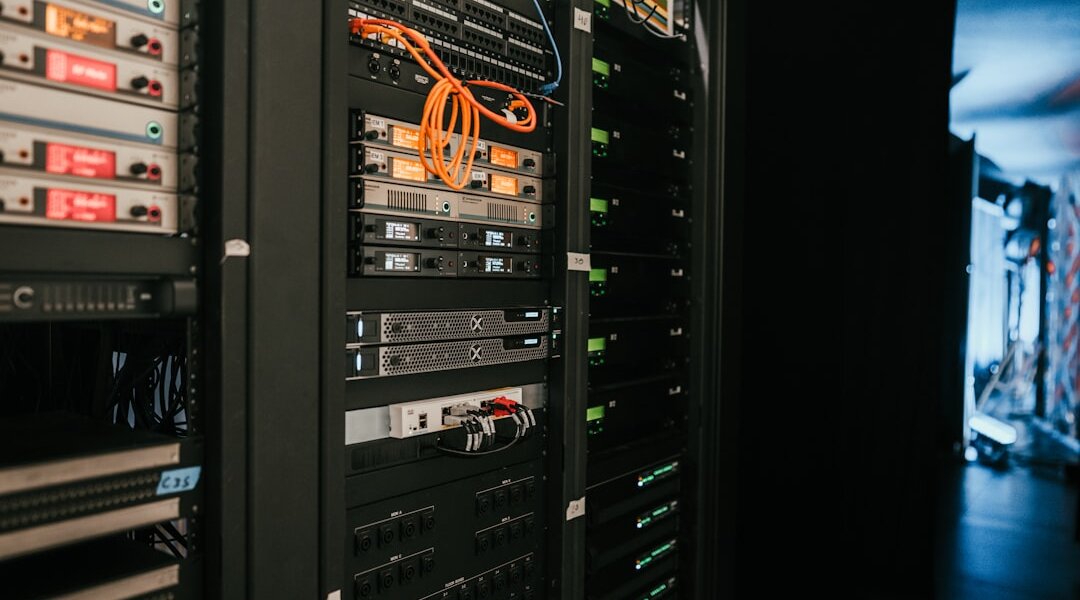
Photo by Kevin Ache on Unsplash
In a stunning strategic pivot, the titans of Silicon Valley – Amazon, Google, Meta, and Microsoft – are collectively pouring an estimated $700 billion into computing equipment and infrastructure dedicated to Artificial Intelligence. This monumental investment marks a significant departure from years of rigorous efficiency pledges and cost optimization, signaling an all-in bet on the transformative power of generative AI. The race isn’t just about software anymore; it’s about owning the physical bedrock upon which the AI revolution will be built.
The Unprecedented AI Infrastructure Arms Race
The numbers alone are staggering. Analyst predictions place the combined capital expenditure of these four tech giants at unprecedented levels, primarily driven by the insatiable demands of large language models (LLMs) and other generative AI technologies. This isn’t just an upgrade; it’s a wholesale re-tooling of their global infrastructure. The goal? To acquire and deploy vast farms of high-performance GPUs, build specialized data centers, and develop custom AI chips capable of training and running increasingly complex AI models at scale.
This massive outlay underscores the fierce competition for AI supremacy. Each company recognizes that leadership in AI, particularly generative AI, will define the next decade of technological advancement, market share, and revenue growth. From enhancing search engines and cloud services to revolutionizing consumer products and enterprise solutions, AI is seen as the ultimate competitive differentiator, justifying an investment that dwarfs many national budgets.
From Efficiency Pledges to Capital Expenditure Spree
For years, Wall Street rewarded tech companies for their commitment to lean operations, optimizing cloud infrastructure for maximum efficiency and cost-effectiveness. The narrative was often about doing more with less, leveraging software optimizations and hardware advancements to drive down the cost per compute cycle. However, generative AI has fundamentally altered this calculus.
Training and running colossal models like GPT-4, Llama, or custom enterprise-specific LLMs requires an unimaginable amount of computational power. These workloads are inherently compute-intensive, memory-hungry, and often benefit directly from sheer brute-force hardware. Consequently, the traditional focus on marginal efficiency gains has been overshadowed by an urgent need for raw compute capacity. The companies are now prioritizing the acquisition of GPUs and other specialized AI accelerators – primarily from NVIDIA, but increasingly through their own custom silicon initiatives – to ensure they have the horsepower necessary to innovate and deploy cutting-edge AI services faster than their rivals. This strategic shift reflects a belief that early and decisive investment in foundational AI infrastructure will yield disproportionate returns in the long run.
Building the Bedrock: GPUs, Custom Silicon, and Data Center Expansion
The bulk of this $700 billion investment is channeled into three key areas:
- Graphics Processing Units (GPUs): NVIDIA’s H100 and upcoming B200 GPUs are the crown jewels of this spending spree. Designed specifically for AI workloads, these chips offer unparalleled parallel processing capabilities essential for training large neural networks. The demand is so high that supply remains a critical bottleneck, driving companies to pre-order billions worth of chips years in advance.
- Custom AI Silicon: To reduce reliance on external suppliers and optimize for their specific software stacks, Amazon (Trainium, Inferentia), Google (TPUs), and Microsoft (Maia, Cobalt) are heavily investing in developing their own custom AI chips. These in-house designs promise greater control, potentially better cost-efficiency at scale, and tailored performance for their unique AI services.
- Data Center Expansion: Accommodating thousands of these power-hungry chips requires massive infrastructure. New data centers are being built or existing ones vastly expanded, equipped with advanced cooling systems, robust power grids, and high-bandwidth networking to handle the immense data flows generated by AI operations. The energy consumption of these facilities is also a growing concern, pushing for innovations in sustainable power solutions.
This unprecedented build-out signifies a foundational transformation, moving beyond mere software innovation to a deep investment in the physical layers of the future internet.
Implications for the Tech Ecosystem and Beyond
Big Tech’s $700 billion AI bet has profound implications. It solidifies NVIDIA’s position as a critical enabler of the AI era, fuels a booming custom chip market, and drives massive innovation in data center technology. For smaller players and startups, access to this high-end compute power will largely depend on the cloud services offered by these giants, potentially cementing their oligopoly in the AI space. Beyond the tech sector, this investment will spur advancements in areas from energy infrastructure to advanced manufacturing, as the world adapts to the colossal needs of the AI age.
This massive financial commitment isn’t just about maintaining current market positions; it’s about shaping the future. By abandoning traditional efficiency metrics for a full-throttle capital expenditure strategy, Amazon, Google, Meta, and Microsoft are laying the groundwork for the next generation of digital services. The AI revolution will be built on this infrastructure, defining who leads and who lags in the unfolding technological landscape.
What do you think are the biggest opportunities or risks arising from this unprecedented investment? Share your thoughts in the comments below!