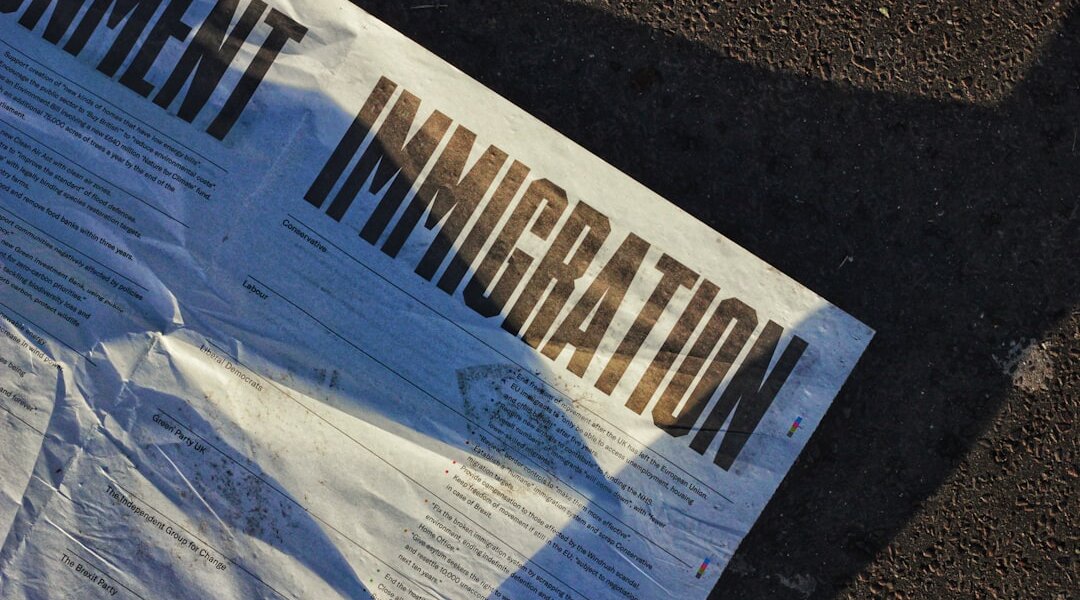
Photo by Metin Ozer on Unsplash
The American dream, for many global tech professionals, often begins with an H1B visa and ideally culminates in a Green Card. However, as we navigate mid-2026, the path has become significantly more challenging. A confluence of policy shifts, legislative proposals, and persistent backlogs is reshaping the US immigration landscape, demanding urgent attention from both aspiring immigrants and their sponsoring employers.
From a tightened H1B lottery to a more discretionary Green Card process, the updates of 2026 are not merely administrative tweaks; they represent fundamental changes that could impact your future in the United States. Understanding these evolving dynamics is crucial for strategic planning and successful navigation.
The Ever-Growing Green Card Backlog: A Discretionary Path Ahead
The Green Card backlog remains a formidable barrier for countless skilled professionals. As of 2026, the US immigration backlog has swelled to over 11.6 million pending cases, more than triple the figure from a decade ago. This widespread delay impacts various application types, from family petitions to employment-based visas. The root cause continues to be the archaic per-country limits, which cap Green Card allocations at just 7% per country, regardless of demand.
For individuals from high-demand countries like India and China, this translates into agonizingly long wait times, often stretching into decades for employment-based categories such as EB-2 and EB-3. The June 2026 Visa Bulletin, for instance, showed a retrogression in final action dates for EB-1 and EB-2 categories for India, while other categories saw minimal or no movement.
Adding another layer of complexity, the US Citizenship and Immigration Services (USCIS) issued a significant Policy Memorandum (PM-602-0199) on May 21, 2026. This memo fundamentally redefines the adjustment of status process, instructing USCIS officers to treat it as a matter of “discretionary grace” rather than an entitlement. This means that even if an applicant meets all statutory requirements, an officer now has the authority to deny the application if they conclude the circumstances do not warrant approval. This shift introduces considerable uncertainty for H1B holders already in the Green Card queue, making a previously straightforward process subject to heightened scrutiny and individual officer discretion.
Navigating the H1B Labyrinth: Higher Costs and Stricter Rules
The H1B visa program, a cornerstone for bringing specialized foreign talent to the US tech sector, is also undergoing significant transformations in 2026. The annual H1B cap continues to be oversubscribed, with USCIS having received enough electronic registrations for FY 2027 by March 31, 2026.
However, the selection process itself has been radically altered. A final rule, effective February 27, 2026, implements a weighted selection process for the FY 2027 H1B cap registration. This new system explicitly favors allocating visas to higher-skilled and higher-paid individuals. For employers, this means a direct link between compensation strategy and the probability of lottery selection, pushing up prevailing wage levels.
Furthermore, a Presidential Proclamation issued on September 19, 2025, introduced an additional $100,000 supplemental payment for certain H1B petitions filed on or after September 21, 2025. This substantial fee dramatically increases the cost of sponsoring international talent, placing a considerable financial burden on businesses, particularly small and medium-sized enterprises (SMBs) who may struggle to compete with larger corporations.
Beyond the lottery and fees, H1B petitions are facing unprecedented scrutiny in 2026. USCIS officers are issuing more Requests for Evidence (RFEs), demanding detailed justifications for job roles, wage levels, and degree requirements. Employers are also experiencing an uptick in compliance audits and site visits, signaling a more aggressive enforcement posture from USCIS. The elimination of automatic Employment Authorization Document (EAD) extensions also adds to workforce disruption and employer compliance risks.
Urgent 2026 Policy Shifts and Their Ramifications
The year 2026 has witnessed several critical policy developments that warrant close attention:
- “Apply from Abroad” Clarifications: An initial Trump administration announcement on May 22, 2026, caused widespread concern by suggesting most Green Card applicants would need to return to their home countries for consular processing. This sparked significant pushback from the tech and AI industries. While USCIS later softened its stance, clarifying that many work visas and immigrants seeking permanent residency would not be impacted, the underlying policy memo still implies that some applicants may be compelled to apply from abroad. This ambiguity creates uncertainty and potential for disruption, especially for those currently in the US on temporary visas.
- Proposed Legislative Overhaul: On June 4, 2026, Congressman Chip Roy introduced the “American White-Collar Worker Jobs Act of 2026.” This ambitious bill proposes sweeping changes to the H1B program, including:
- Replacing the lottery with a wage-based selection process.
- Requiring employers to prioritize American workers.
- Preventing companies with recent layoffs from hiring H1B workers.
- Ending H1B as a pathway to permanent residency (“dual intent”). This is a particularly impactful proposal, as the ability to pursue a Green Card while on an H1B has been a cornerstone of the program.
- Eliminating the Optional Practical Training (OPT) program.
- Reducing the maximum H1B visa duration from six years to two years.
While this is proposed legislation and its passage is not guaranteed, its introduction signals a strong legislative intent to significantly restrict the H1B program and its utility as a stepping stone to permanent residency.
- Expanded Social Media Screening: The Department of State has significantly expanded its social media screening program for all visa applicants, including those seeking immigrant visas. This trend, intensified in 2025 and 2026, means consular officers are routinely reviewing publicly available social media accounts as part of the adjudication process.
Conclusion: Navigating an Evolving Landscape
The US immigration landscape in 2026 is characterized by increased complexity, heightened scrutiny, and a palpable shift towards more restrictive policies. The Green Card gridlock, exacerbated by per-country limits and a new discretionary adjustment of status policy, means longer waits and greater uncertainty. Concurrently, H1B hurdles have intensified with a weighted lottery, a substantial supplemental fee, and proposed legislation that could fundamentally alter the program’s purpose.
For tech professionals and employers, proactive engagement and informed decision-making are no longer optional but essential. Staying abreast of policy changes, understanding their nuanced implications, and seeking expert legal counsel are paramount to safeguarding your immigration future. The environment demands a strategic approach to every step, from initial visa applications to the pursuit of permanent residency.
Call to Action:
Don’t navigate these complex changes alone. Consult with an experienced immigration attorney to assess your specific situation, understand the latest updates, and develop a robust strategy for your US immigration journey. Stay informed, stay prepared, and advocate for policies that support a thriving global tech workforce.