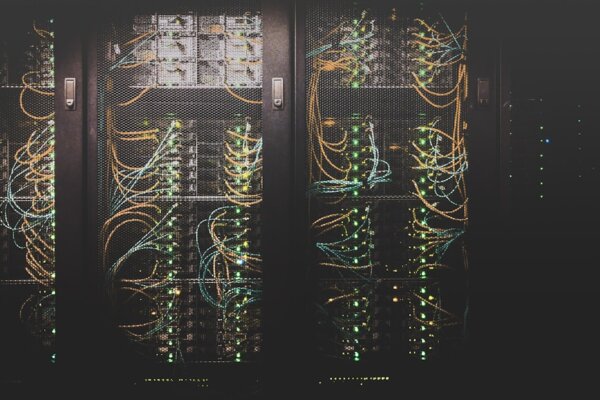
Photo by Jakub Żerdzicki on Unsplash
The tech world is abuzz, and at the epicenter of this excitement stands NVIDIA. The chip giant recently delivered an earnings report that can only be described as stunning, pushing its valuation to unprecedented heights and cementing its role as the apex predator in the artificial intelligence landscape. But as NVIDIA’s stock scales new peaks, a critical question looms over investors and analysts alike: Is this a harbinger of an overdue market correction, or are we witnessing the dawn of a sustained, AI-fueled bull run?
NVIDIA’s Unprecedented Earnings and AI Dominance
NVIDIA’s financial results for the first quarter of fiscal year 2027, which ended April 26, 2026, were nothing short of extraordinary. The company reported a record revenue of $81.6 billion, marking an astonishing 20% increase from the previous quarter and an 85% surge year-over-year. The driving force behind this phenomenal growth was its Data Center segment, which alone generated a record $75.2 billion in revenue, up 92% from a year ago.
Profitability also soared, with net income surging to $58.3 billion, a 37% jump quarter-over-quarter and over 200% year-over-year. Over three fiscal years, NVIDIA’s net income ballooned by 2,900%, from $4.37 billion in fiscal 2023 to $120 billion in fiscal 2026, largely powered by insatiable AI demand. CEO Jensen Huang encapsulated the sentiment, stating that “Global demand for NVIDIA’s AI infrastructure is incredibly strong” and that “AI inference token generation has surged tenfold in just one year.” He famously added, “Demand has gone parabolic.”
NVIDIA’s strategic prowess extends beyond hardware; its proprietary CUDA software ecosystem acts as a significant moat, creating high switching costs for customers and solidifying its market leadership. With the company controlling over 80% of the market for GPUs used in training and deploying AI models, its position as the backbone of modern AI development is undeniable. Furthermore, NVIDIA’s proactive steps, such as an $80 billion share repurchase authorization and a substantial increase in its quarterly cash dividend, underscore management’s confidence in future growth.
The Case for a Looming Market Correction
Despite NVIDIA’s dazzling performance, a chorus of cautionary voices suggests that a market correction might be on the horizon. One prominent concern is the concept of an “AI bubble,” fueled by what some analysts term “circular financing,” where interconnected AI ecosystem players invest in each other and purchase each other’s products. This raises questions about the organic nature and sustainability of the current demand surge.
Another point of contention is the “capex gap.” While companies are pouring massive capital into building AI infrastructure, the actual revenue generated from generative AI software and paying users is reportedly lagging. This disconnect could eventually lead to a re-evaluation of sky-high valuations. Moreover, the shift in focus from AI model training to inference could introduce new competitive dynamics. Inference, which involves running AI models in real-world applications, doesn’t always necessitate NVIDIA’s most expensive, cutting-edge chips, potentially opening the door for rivals and diversifying hardware demand.
The semiconductor industry itself is cyclical, and risks of execution failure always persist. Concerns about market concentration, with a few tech giants like NVIDIA dominating the investment landscape, also contribute to worries about market skew and potential instability. Indeed, NVIDIA’s stock experienced a technical correction (a drop of over 10%) in June 2024, prompting speculation about a broader breather for the tech-led rally. Additionally, major cloud providers like Google, Amazon, and Microsoft are developing their own custom silicon, and AMD is reportedly closing the performance gap, signaling increased competition.
The New AI-Driven Bull Run Thesis
Conversely, many argue that NVIDIA’s success is not a bubble but rather a testament to a fundamental, long-term shift driven by AI. Proponents of a new bull run emphasize that AI is not merely a technological trend but a “profound transformation” and “essential infrastructure,” akin to electricity or the internet. The transition from AI model training to widespread inference is expected to unlock immense demand, as inference costs are incurred every time a user interacts with an AI application, leading to a continuous and accelerating need for computing power.
The emergence of “Sovereign AI,” where governments globally invest in domestic AI capabilities for data security and national strategic advantage, presents another significant growth catalyst for NVIDIA. Analysts remain overwhelmingly bullish, with a consensus “Strong Buy” rating and average 12-month price targets ranging from $305 to $310, with some highs reaching $500.
NVIDIA’s robust full-stack ecosystem, encompassing hardware, software, and networking solutions, provides a deeply entrenched competitive advantage that is difficult for competitors to replicate. The relentless investment by hyperscalers like Microsoft, Google, Amazon, and Meta into AI infrastructure further validates the long-term demand for NVIDIA’s offerings. Despite its multi-trillion-dollar valuation (surpassing $5 trillion in 2025 and over $5.20 trillion as of June 4, 2026), some analysts even suggest that NVIDIA might be undervalued when considering its unprecedented growth rates compared to other tech giants.
Conclusion: Navigating the AI Investment Landscape
NVIDIA’s latest earnings report undoubtedly marks a monumental moment in the technology and investment landscape. The company’s unparalleled growth in the AI sector paints a compelling picture of a future increasingly powered by artificial intelligence. While the “AI bubble” skeptics highlight valid concerns regarding market concentration, valuation sustainability, and emerging competition, the “new bull run” advocates point to the transformative power of AI, NVIDIA’s deep technological moat, and sustained enterprise investment as indicators of long-term growth.
Ultimately, the market’s trajectory will likely be a complex interplay of these forces. For tech-savvy investors, understanding both narratives is crucial. The current environment demands careful consideration, a focus on fundamentals, and an eye on the evolving AI ecosystem beyond just the headline numbers. Whether you lean towards caution or conviction, one thing is clear: NVIDIA is at the forefront of a technological revolution that will reshape industries for decades to come.
What are your thoughts on NVIDIA’s future and the broader AI market? Share your insights in the comments below!