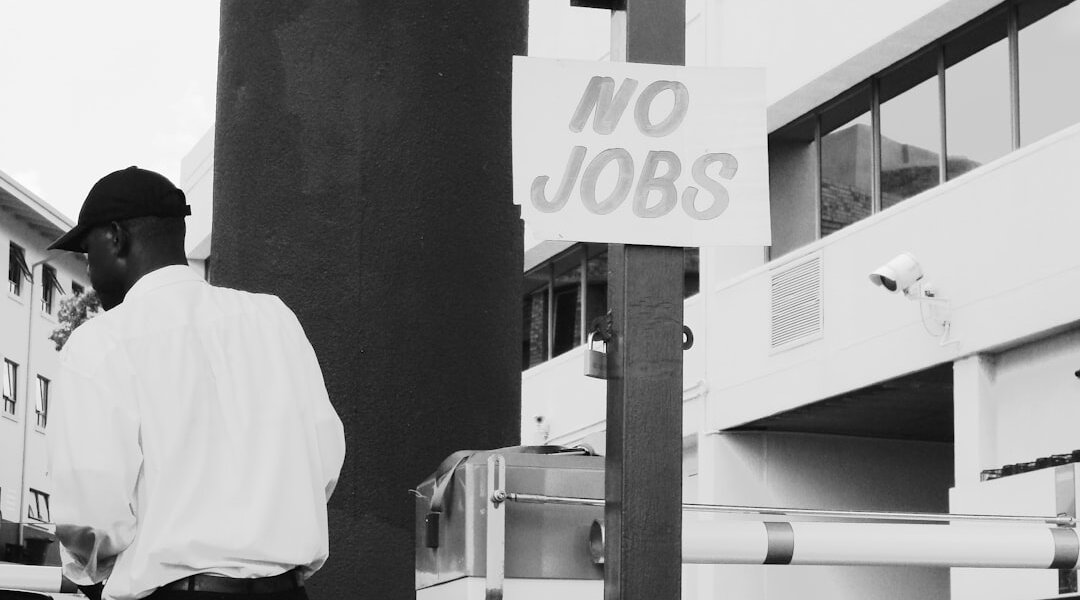
Photo by Hennie Stander on Unsplash
In an increasingly interconnected global economy, the news cycle often brings stories of rapid change. Lately, a dominant narrative has emerged: mass layoffs. Across industries that once seemed impervious to such volatility – from the innovative corridors of tech giants to the foundational factories of manufacturing, and even the everyday operations of the services sector – thousands of jobs are vanishing, often with startling speed. This isn’t merely a cyclical adjustment; it’s a profound recalibration driven by a confluence of economic pressures, technological advancements, and strategic shifts.
The Shifting Sands of the Global Economy
The current wave of layoffs is deeply rooted in the economic landscape that has evolved significantly over the past few years. A primary driver has been the unwinding of the rapid expansion seen during the pandemic. Many companies, particularly in tech, engaged in an “overzealous hiring spree,” anticipating a sustained surge in digital demand that ultimately didn’t materialize as the world returned to pre-pandemic norms. This led to bloated payrolls, making companies vulnerable when economic conditions tightened.
Simultaneously, aggressive interest rate hikes by central banks, aimed at curbing persistent inflation, have increased the cost of borrowing and servicing debt for businesses. This financial squeeze has forced companies to “tighten their belts,” making cost-cutting measures, including workforce reductions, a necessary step to protect profit margins and appease investors. The prevailing sentiment among many employers is a “do more with less” approach, pushing for greater productivity from a leaner workforce.
AI: The Efficiency Engine and Job Disruptor
Perhaps the most significant and transformative factor fueling the current layoffs is the rapid integration of Artificial Intelligence (AI). AI is now frequently cited as a leading reason for job cuts, particularly in the tech sector. Companies are investing billions in AI infrastructure and research, leading to a strategic reshuffling of their workforces. Roles involving routine or repetitive tasks are increasingly susceptible to automation, making them obsolete overnight.
This isn’t just about replacing human workers with AI; it’s about reshaping entire workflows and organizational structures. Companies are streamlining operations and consolidating teams to become more efficient, often leading to job reductions in areas like middle management, operations, and even auditing. While some argue that AI will create new jobs, the immediate impact is a focus on “efficiency in an era of AI adoption,” meaning fewer people are needed to achieve the same or even greater output. The shift also impacts hiring, with some companies delaying recruitment while they evaluate how AI changes their staffing needs, potentially making it tougher for younger and entry-level workers to find jobs.
Beyond Tech: Manufacturing and Services Feel the Squeeze
While tech layoffs often grab headlines, the impact is far from limited to Silicon Valley. The manufacturing sector is undergoing its own transformation, with automation playing a crucial role in workforce reductions. Manufacturers have invested heavily in technologies to automate operations, meaning they “do not need as many workers to provide the same output.” Additionally, factors like tariffs, trade disputes, and geopolitical tensions contribute to uncertainty, prompting manufacturers to streamline operations and control costs.
The services sector, a broad category encompassing everything from retail and finance to transportation and government, is also experiencing significant upheaval. Retailers face challenges from inflation and changing consumer spending habits, leading to store closures and layoffs. Financial firms have cut jobs due to economic concerns and restructuring. Even government agencies have seen substantial workforce reductions due to cost-cutting initiatives and public policy changes. The transportation industry, too, has announced significant cuts, further illustrating the widespread nature of this phenomenon.
Navigating the New Normal: A Human Cost and Future Outlook
The human cost of these rapid layoffs is immense. Beyond the immediate financial hardship, job loss can lead to significant stress and uncertainty for individuals and their families. For those who remain, a sense of “survivor’s guilt” and increased pressure to “do more with less” can impact morale and well-being. The abrupt nature of many layoffs, often with little warning, further erodes trust between employees and employers.
However, amidst the challenges, there are also opportunities for adaptation and growth. The demand for tech talent, particularly in specialized AI-related roles, remains robust, even as other areas shrink. Companies are increasingly looking for “unicorns” who can wear multiple hats and adapt to evolving technological landscapes. This necessitates a focus on upskilling and reskilling for individuals, as well as proactive workforce planning and investment in employee development by companies.
Conclusion
The current wave of layoffs is a complex and multifaceted phenomenon, reflecting a global economy in flux. Economic pressures, the transformative power of AI, and strategic corporate realignments are reshaping industries at an unprecedented pace. While the immediate impact is undoubtedly challenging for many, it also underscores the critical need for adaptability, continuous learning, and strategic foresight. For both individuals and organizations, understanding these underlying forces and proactively preparing for the future of work will be paramount to navigating this new era successfully. What steps are you taking to adapt to this rapidly changing landscape?