Photo by Igor Omilaev on Unsplash
The Rise of Autonomous Coding and Agentic AI
The tech industry is no stranger to disruption, but the latest wave of innovation driven by artificial intelligence feels different. The recent news of Blitzy, a pioneer in autonomous coding, securing a staggering $200 million in funding at a $1.4 billion valuation, is a testament to the surging belief in agentic AI’s power to redefine software development. Autonomous coding isn’t just about generating snippets of code; it envisions AI agents capable of understanding high-level requirements, designing architectures, writing, testing, deploying, and even maintaining entire software applications with minimal human intervention. This ‘agentic AI’ can plan, execute, and self-correct complex tasks iteratively, pushing the boundaries of what automated systems can achieve.
For proponents, this technology promises unprecedented efficiency, faster time-to-market, and a dramatic reduction in development costs. Imagine a future where a single command or a natural language prompt could spin up sophisticated applications. It’s an alluring vision that raises a profound question: In this rapidly evolving landscape, are human developers rapidly becoming obsolete?
The Obsolete Developer Narrative: Fact or Fiction?
The fear of job displacement by automation is as old as the industrial revolution. With AI now tackling tasks once considered uniquely human – like creative writing, strategic planning, and, crucially, coding – the concern for software developers is understandable. If AI can write perfect, bug-free code at lightning speed, what role is left for the person who used to do just that?
However, framing this as a simple replacement scenario overlooks the fundamental differences and inherent limitations of even the most advanced agentic AI. While AI excels at pattern recognition, optimization, and generating code based on existing paradigms, it often struggles with true innovation, understanding nuanced human intent, or navigating ethically ambiguous situations. Developers bring irreplaceable skills to the table: creativity to envision entirely new solutions, critical thinking to dissect complex, unstructured problems, and the ability to empathize with end-users to design intuitive experiences. They understand the ‘why’ behind the code, not just the ‘how’. Human intuition, common sense, and the capacity for abstract strategic thinking remain outside AI’s current grasp.
Evolving Roles: Human-AI Collaboration, Not Replacement
Instead of obsolescence, the more probable future for human developers is one of evolution and augmentation. The rise of autonomous coding will likely shift developers’ roles from primarily coding to higher-level functions, demanding a new skill set focused on supervision, strategic design, and ethical oversight. Consider these evolving responsibilities:
- AI Orchestration and Prompt Engineering: Developers will become masters at guiding AI agents, defining precise requirements, and refining prompts to achieve desired outcomes.
- System Architecture and High-Level Design: The focus will shift to designing complex, scalable systems and integrating AI-generated components effectively, ensuring cohesion and performance.
- Code Review and Verification: Human eyes will still be crucial for reviewing AI-generated code for security vulnerabilities, edge cases, and compliance with organizational standards.
- Ethical AI and Bias Mitigation: Developers will play a vital role in ensuring AI systems are developed and deployed ethically, free from biases, and compliant with regulations.
- Complex Problem Solving & Innovation: Tackling truly novel challenges, pushing the boundaries of what’s possible, and conceptualizing entirely new products will remain a human domain.
- User Experience and Human-Computer Interaction: Understanding and translating human needs into functional, enjoyable software experiences requires deep empathy and insight.
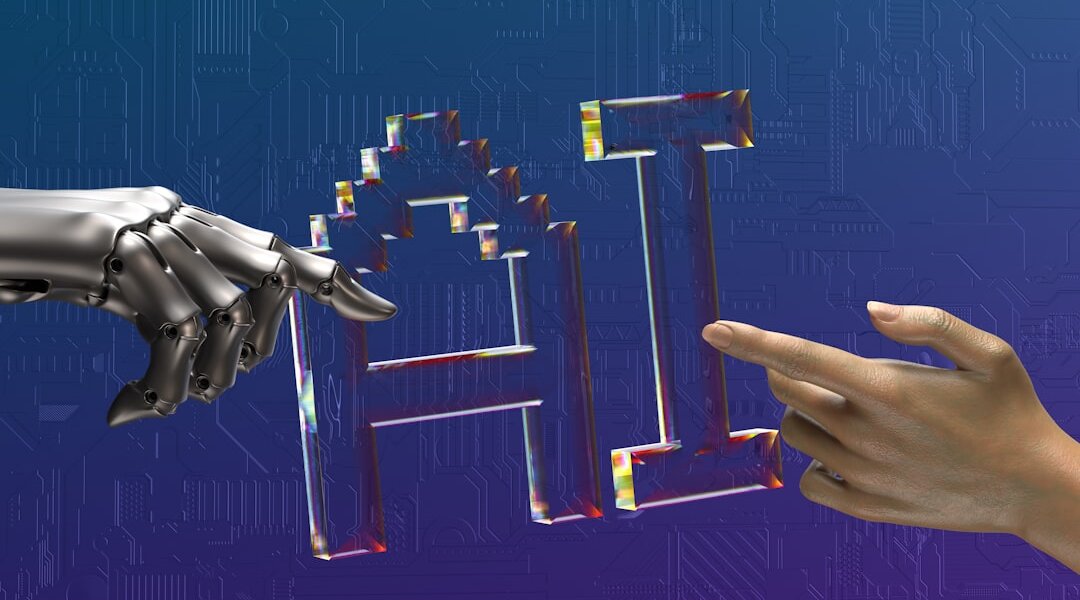
In this collaborative future, developers will leverage AI as a powerful co-pilot, offloading repetitive and mundane tasks to focus on creativity, strategy, and the uniquely human aspects of software engineering. This transformation promises to elevate the developer’s role, making their work more impactful and intellectually stimulating.
Navigating the New Landscape: Adapt and Thrive
The impressive valuation of companies like Blitzy underscores a significant industry shift towards autonomous coding and agentic AI. However, this is not a death knell for human developers but a clarion call for adaptation. The demand for software solutions isn’t shrinking; it’s exploding. AI will help us meet that demand more efficiently, but it needs human intelligence, creativity, and ethical guidance to do so responsibly and effectively. The developers who will thrive are those who embrace lifelong learning, cultivate strong critical thinking and problem-solving skills, and become adept at working symbiotically with AI tools.
The age of agentic AI isn’t about eliminating human developers; it’s about empowering them to build more, innovate faster, and focus on the problems that truly matter. The future of software development is not a competition between humans and AI, but a powerful partnership. Are you ready to lead the charge in this new era?