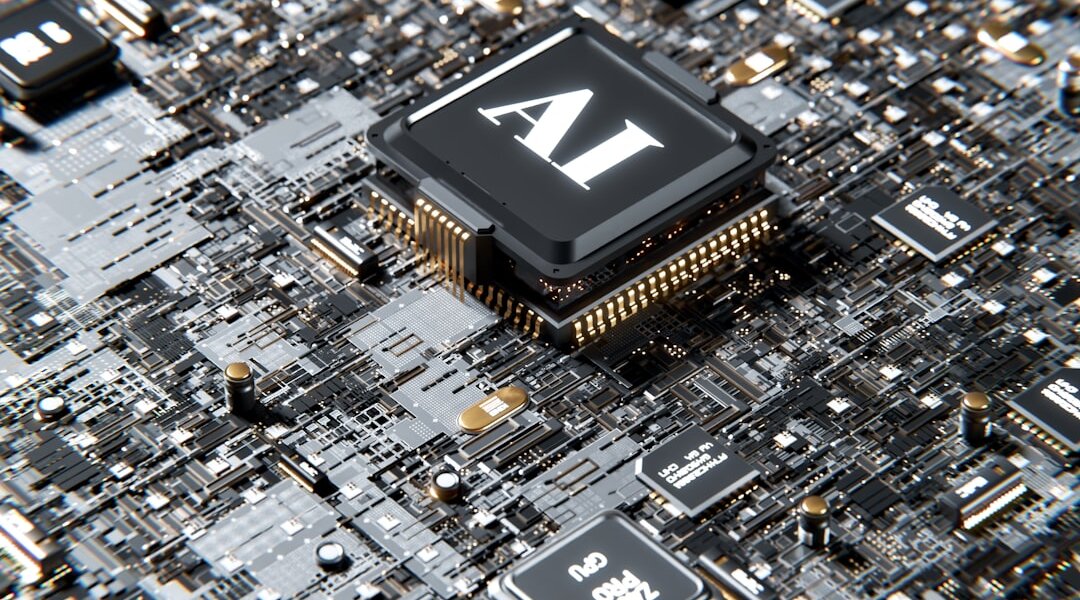
Photo by Igor Omilaev on Unsplash
The Great Tech Pivot: Billion-Dollar Giants Ditching Legacy Projects for an AI-First Future
The tech world is no stranger to seismic shifts. From the mainframe era to the personal computer revolution, then the internet boom, and more recently, the mobile-first paradigm, evolution is the only constant. Today, we stand at the precipice of another monumental transformation: The Great Tech Pivot. Billion-dollar giants, once anchored by sprawling legacy systems and established workflows, are now aggressively reorienting their entire strategies towards an AI-first future. This isn’t just about integrating AI; it’s about fundamentally rethinking every product, service, and operational process through an artificial intelligence lens. /
For decades, many enterprises thrived on robust, often monolithic, software architectures. These systems, while reliable, were built for a different era—one characterized by slower data flows, less interconnectedness, and a human-centric decision-making process. The rise of generative AI and advanced machine learning has shattered these old paradigms, presenting both an existential threat to those who cling to the past and an unprecedented opportunity for those bold enough to embrace change. The question is no longer if AI will transform your business, but how quickly you can adapt.
The Irresistible Pull of AI: Why Giants Are Shifting Gears
What compels established behemoths to undertake such a risky and costly endeavor as abandoning well-entrenched projects? The answer lies in the undeniable advantages AI offers. First, there’s the promise of unparalleled efficiency and automation. AI-powered systems can process vast datasets, identify patterns, and execute tasks at speeds and scales impossible for human teams. This translates into significant cost reductions and accelerated time-to-market for new innovations. Imagine customer service operations where AI handles 80% of inquiries, freeing human agents for complex issues.
Second, AI unlocks entirely new capabilities and revenue streams. Personalized experiences, predictive analytics, intelligent automation, and hyper-targeted marketing are no longer futuristic concepts but present-day necessities. Companies leveraging AI can offer products and services that were once unimaginable, creating competitive moats that are increasingly difficult to cross. This isn’t just incremental improvement; it’s a quantum leap in what’s possible. Finally, the competitive landscape is brutal. Startups born in the cloud with AI as their foundational layer are inherently agile and can innovate at a blistering pace. To compete, established players must shed their technical debt and adopt similar nimbleness. Ignoring this trend is akin to ignoring the internet in the 90s.
From Legacy Code to Intelligent Core: The Mechanics of the Pivot
The transition from legacy systems to an AI-first architecture is not for the faint of heart. It involves a multi-faceted approach that often begins with a critical assessment of existing infrastructure. Companies are identifying “sunset” candidates—projects and platforms that are expensive to maintain, offer diminishing returns, and cannot be easily retrofitted with AI capabilities. These are being systematically phased out or entirely replaced. /
Concurrently, there’s a massive investment in AI talent, infrastructure, and data strategy. Building an AI-first future requires more than just algorithms; it demands robust data pipelines, specialized hardware (like GPUs), and a culture that understands and champions machine learning. Many organizations are establishing dedicated AI labs, acquiring promising AI startups, and retraining their existing workforce. Data governance and ethical AI considerations are also paramount, ensuring that these powerful new systems are developed and deployed responsibly. This often means breaking down internal silos, fostering cross-functional collaboration, and adopting agile methodologies to iterate quickly on AI models and applications.
Challenges and Opportunities in the AI Frontier
While the benefits are clear, the path to an AI-first future is fraught with challenges. The sheer complexity of integrating AI into existing enterprise systems is immense. Data quality, privacy concerns, and the scarcity of specialized AI talent remain significant hurdles. Moreover, the ethical implications of AI—from bias in algorithms to job displacement—require careful navigation. Companies must not only innovate technologically but also ethically and socially.
However, the opportunities far outweigh the obstacles. For businesses, embracing AI means unlocking unprecedented levels of insight, automating mundane tasks, fostering hyper-personalization, and creating entirely new market categories. For individuals, it means a chance to reskill and upskill, moving into roles that require critical thinking, creativity, and the ability to work alongside intelligent machines. The companies that successfully navigate this pivot will not only survive but thrive, setting new benchmarks for innovation and customer experience in the decades to come.
Conclusion: Embrace the AI Revolution
The Great Tech Pivot is more than a trend; it’s a fundamental recalibration of how technology companies operate and innovate. Billion-dollar giants are making bold moves, shedding the weight of legacy systems to embrace the agility and power of AI. This shift is critical for maintaining competitive advantage and unlocking the next generation of technological breakthroughs. The message is clear: adapt or be left behind. /
Is your organization ready to make the pivot? The time to invest in AI infrastructure, talent, and strategy is now. Don’t just witness the future; build it.