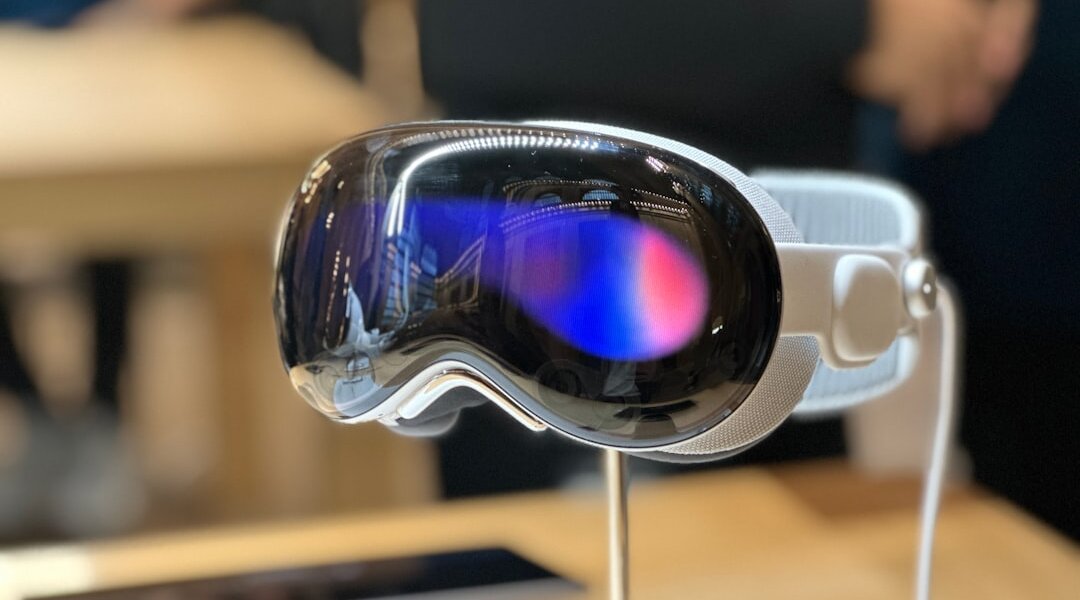
Photo by Raman Shaunia on Unsplash
When Apple unveiled the Vision Pro, it ignited conversations across the tech world, promising a new era of spatial computing. More than two years into its journey, the device has seen both fervent enthusiasm and critical scrutiny. Now, with the highly anticipated visionOS 27 update on the horizon, the industry is bracing for a significant shift. This update isn’t just about new features; it’s a critical reality check that will shape Apple’s market trajectory, intensify competition, and redefine the future of augmented and virtual reality.
The visionOS 27 Update: A Deep Dive into Spatial Computing Enhancements
The next major software iteration, visionOS 27, slated for a public release in Fall 2026, is poised to be a game-changer for the Vision Pro experience. Apple is clearly doubling down on its “spatial computing” vision, integrating features that promise a more intuitive and immersive user interaction. A headline feature is the deeper integration of Apple Intelligence and Siri AI. While the full Siri AI capabilities are expected in a separate update later in 2026, visionOS 27 will enable Siri to understand and interpret a user’s surroundings in real-time, identifying objects and providing contextual information. Imagine asking Siri about an item in your physical room and getting instant, relevant details.
Personalization takes a leap forward with Spatial Panoramas, allowing users to transform their own panoramic photos into custom 3D environments that serve as their virtual backdrops. This, alongside a new official Icelandic Thórsmörk environment, promises richer, more personalized experiences. Usability enhancements include curved windows for apps like Safari and Apple TV, designed to create a more immersive workspace. Notifications will become more intelligent, automatically expanding when a user glances at them, and the Control Center is getting a redesign for easier navigation. Furthermore, Apple promises up to three times faster Wi-Fi connections and improved developer tools, including RealityKit enhancements and better game engine support, fostering a more robust app ecosystem. Accessibility is also a focus, with automatic, on-device video subtitles and native eye-tracking control for certain power wheelchairs.
While the software enhancements are significant, the hardware narrative for the Vision Pro 2 or a cheaper variant remains complex. Reports indicate that a direct successor is unlikely before late 2028 or 2029, with Apple potentially prioritizing AI smart glasses for 2027. Indeed, a project for a lower-cost display for a cheaper Vision Pro has reportedly been suspended by Apple’s supplier, Samsung, signaling a strategic shift. The current Vision Pro itself received an M5 chip refresh in October 2025, enhancing its core performance.
Apple’s Stock Trajectory: Navigating the Vision Pro’s Market Influence
The Vision Pro’s journey has been closely watched by investors. Initial market reactions were mixed; Apple’s shares saw a slight dip after the announcement, followed by a modest uptick when the sale date was revealed. However, the device’s high price point ($3,499, recently raised to $3,699) and niche market appeal led to sales expectations being cut from millions to around half a million units. Some analysts linked a 12% decrease in Apple’s share value to a perceived stagnation in iPhone improvements, hoping the Vision Pro would reignite growth.
Despite these challenges, the Vision Pro is far from a financial “failure.” In Q4 2025 alone, Apple generated over $157 million from Vision Pro sales, a considerable figure that rivals a significant portion of Meta Reality Labs’ revenue for the same period. Morgan Stanley analysts, back in early 2024, conservatively predicted $4 billion in revenue by fiscal year 2027, with an optimistic scenario reaching $40 billion if the device achieves 1% penetration of the iPhone user base within five years. The success of visionOS 27, particularly its AI integrations and developer support, will be crucial in expanding the Vision Pro’s appeal beyond early adopters and influencing investor confidence in Apple’s long-term AR/VR strategy.
The AR/VR Arena: How Competitors Are Responding
The introduction of the Vision Pro undeniably intensified the competition in the AR/VR space. Meta, a long-standing player with its Quest series, continues to offer a strong value proposition. The Meta Quest 3 and 3S are lauded for their balanced experience across gaming, mixed reality, fitness, and entertainment, often at a significantly lower price point. Meta’s strategy appears to be shifting, with a greater focus on mobile platforms and the Meta Horizon Engine, while Horizon Worlds remains available in VR but with limited new game development.
A new formidable rival has also emerged: the Samsung Galaxy XR, launched last year. This device directly competes with the Vision Pro, offering similar features and intuitive eye and hand controls, powered by Google’s Android XR platform. The Galaxy XR’s entry, particularly with its Android integration, has the potential to make mixed reality more mainstream and accessible, creating a distinct alternative to Apple’s closed ecosystem. Other players like Sony with its PlayStation VR2 and various PC VR headsets (Steam Frame, Pimax Crystal) continue to carve out their niches, primarily focusing on gaming and enthusiast markets. The Vision Pro’s software updates and future hardware iterations will dictate whether Apple widens its lead in premium spatial computing or forces competitors to innovate more aggressively in their respective segments.
Beyond the Headset: The Broader Future of Spatial Computing
The AR/VR market is on a rapid growth trajectory, projected to reach $26.71 billion in 2026 and an impressive $171.33 billion by 2034. The Vision Pro and its subsequent updates are central to a broader industry shift towards spatial computing – a paradigm where digital content seamlessly integrates with and interacts with the real world. This technology is becoming a cornerstone of AR/VR, enabling devices to understand and map environments in real-time, creating dynamic and adaptive virtual experiences.
Key trends shaping this future include the demand for hyper-realistic experiences, driven by advancements in graphics, AI, and spatial audio, blurring the lines between virtual and reality. AI integration is crucial, enhancing real-time data processing and enabling more dynamic and interactive virtual environments. Beyond consumer entertainment, AR/VR is seeing expanded adoption in enterprise sectors for training, diagnostics, and maintenance in industries like manufacturing and healthcare. As device costs fall and form factors improve, the consumer market is expected to grow, fueled by gaming, social XR, and AI-powered personal computing. The long-term vision, as evidenced by Apple’s apparent shift towards AI smart glasses, suggests a future where immersive technology becomes lighter, more affordable, and integrated into everyday life, potentially moving beyond bulky headsets to more discreet wearables.
Conclusion
Apple’s Vision Pro remains a fascinating and ambitious endeavor. The visionOS 27 update, with its focus on AI, personalization, and user experience, is a vital step in realizing the full potential of spatial computing. Its impact on Apple’s stock will depend on market adoption and how effectively these software enhancements translate into tangible value for users. Meanwhile, competitors like Meta and Samsung are pushing their own visions, ensuring a dynamic and innovative AR/VR landscape. The future of AR/VR and spatial computing is not just about isolated devices but about a connected, intelligent, and increasingly realistic digital layer augmenting our physical world. The next few years will undoubtedly be transformative.
What are your thoughts on the Vision Pro’s trajectory and the future of spatial computing? Share your predictions in the comments below!