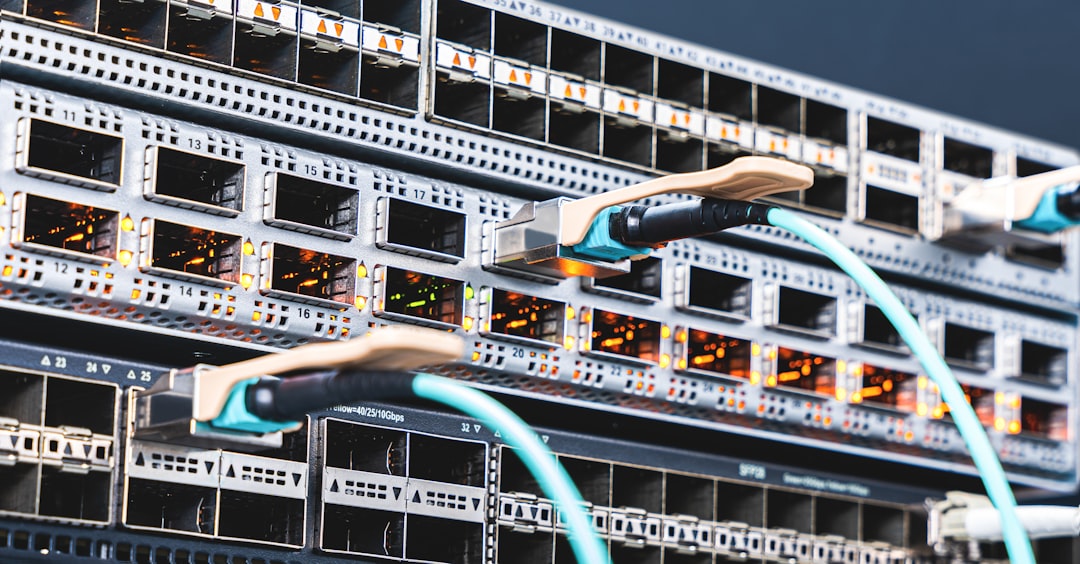
Photo by Lightsaber Collection on Unsplash
The global artificial intelligence landscape is witnessing an unprecedented acceleration, transforming from a competitive sprint into an outright arms race. At the forefront of this intense technological battle, two industry titans, Google and SpaceX, have recently inked a staggering deal that underscores the insatiable demand for AI computing power. In a move set to reshape the tech ecosystem, Google will pay SpaceX an astounding $920 million per month for access to 110,000 Nvidia GPUs, a strategic maneuver directly linked to SpaceX’s impending trillion-dollar IPO. This agreement not only highlights the critical role of and in the current tech paradigm but also showcases the innovative strategies companies are employing to secure a competitive edge.
The Billion-Dollar Bet: Google’s Urgent Need for AI Power
The core of this monumental agreement sees committing to a monthly payment of $920 million to SpaceX. This substantial investment is not merely for hardware; it’s for crucial compute capacity, specifically access to approximately 110,000 GPUs, along with CPUs, memory, and other related components. The deal, which commences in October 2026 and runs through June 2029, is projected to generate over $30 billion for SpaceX if it runs its full course.
Google’s motivation is clear: a surging customer demand for its agentic AI platform, Gemini Enterprise. A Google spokesperson confirmed that this deal provides “short-term, timely agreement to ensure we have bridge capacity to meet surging customer demand” for Gemini Enterprise, which has exceeded expectations. This indicates the immense pressure on leading AI developers to scale their infrastructure rapidly, ensuring their platforms can handle increasingly complex AI models and user interactions. The capacity will ramp up through September 2026 at a reduced fee, with Google retaining the right to terminate the agreement if SpaceX fails to deliver the promised GPU capacity by September 30, 2026.
SpaceX’s Strategic Pivot: From Rockets to AI Infrastructure
While primarily known for its groundbreaking advancements in space exploration, is rapidly emerging as a formidable player in the AI infrastructure domain. This deal with Google is not an isolated incident; it follows a similar arrangement with AI startup Anthropic, which also secured significant compute resources from SpaceX earlier this year. These agreements underscore a strategic pivot for Elon Musk’s company, leveraging its considerable investments in AI infrastructure, initially built for its own AI venture, xAI, and its chatbot Grok.
By leasing out its extensive data center capacity, including massive clusters of GPUs, SpaceX is effectively monetizing its AI hardware assets, turning them into a significant revenue stream. This strategic move positions SpaceX not just as a space and satellite internet provider but also as a critical enabler in the global AI arms race, providing essential computing power to other major tech players. Analysts project that SpaceX’s data center revenue could soon rival proceeds from its Starlink and launch services.
Nvidia at the Epicenter: Fueling the AI Revolution
At the heart of this escalating arms race is , whose GPUs have become the de facto standard for training and deploying advanced AI models. The demand for Nvidia’s high-end AI chips has reached unprecedented levels, driving record revenues for the company and solidifying its position as the indispensable backbone of artificial intelligence. Reports indicate that prices for Nvidia AI chips have even doubled in certain markets due to overwhelming demand and export restrictions.
Nvidia’s strategic foresight in developing a comprehensive ecosystem around its GPUs, including its CUDA software platform, has created a powerful moat, making it challenging for competitors to replicate its dominance. As AI models grow in complexity and require ever-increasing computational power, the reliance on Nvidia’s cutting-edge hardware, such as its Blackwell generation chips, will only intensify, further fueling this global technological competition.
The Trillion-Dollar Takeoff: Implications of SpaceX’s IPO
This massive deal with Google arrives just ahead of ‘s highly anticipated Initial Public Offering (), which is poised to be one of the largest in history. Early estimates suggest a valuation ranging from approximately $1.7 trillion to a staggering $2.1 trillion, a figure that could catapult Elon Musk into the exclusive club of trillionaires. The IPO is expected to raise around $75 billion.
The timing of the deal is strategic, showcasing SpaceX’s diversified revenue streams and its pivotal role in the burgeoning industry, which could significantly bolster investor confidence ahead of its public debut. While some analysts express caution regarding the valuation, the sheer scale of the company’s ambition across space, internet, and AI, combined with the proven demand for its services, presents a compelling narrative for potential investors. This could set a new benchmark for tech company valuations and further entrench the interconnectedness of seemingly disparate sectors like aerospace and artificial intelligence.
Conclusion: A New Era of Interdependence
The $920 million monthly deal between Google and SpaceX for chips is a powerful testament to the escalating arms race and the intricate web of interdependence forming within the tech industry. It highlights Google’s urgent need for advanced compute capacity to maintain its lead in AI development and SpaceX’s shrewd strategy to capitalize on its infrastructure ahead of a historic . As companies pour billions into AI research and development, the demand for specialized hardware will only grow, cementing Nvidia’s position as a linchpin and fostering innovative partnerships that transcend traditional industry boundaries. The race for AI supremacy is far from over, and such colossal deals are merely the opening salvo in what promises to be a transformative era.
What are your thoughts on this unprecedented collaboration and its impact on the future of AI?